Uniform 4-Point Roster System to Govern Seniority Among Promotees, LDCE, and Direct Recruits
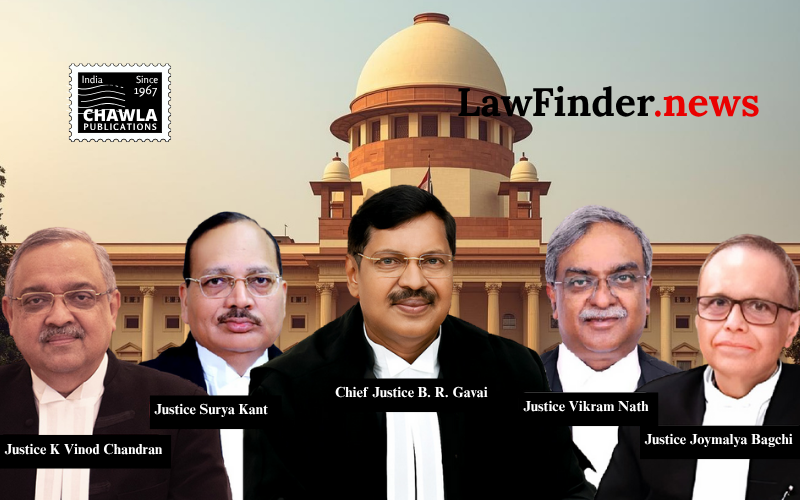
In a landmark judgment, the Supreme Court of India has issued comprehensive guidelines to address the perennial issue of determining inter se seniority within the cadre of Higher Judicial Services (HJS) across Indian states. The Constitution Bench, headed by Chief Justice B.R. Gavai, along with Justices Surya Kant, Vikram Nath, K. Vinod Chandran, and Joymalya Bagchi, has laid down a uniform 4-point roster system for seniority, ensuring fairness and uniformity among Regular Promotees (RP), Limited Departmental Competitive Exam (LDCE) promotees, and Direct Recruits (DR).
The judgment was delivered on November 19, 2025, in response to concerns regarding the discrepancies in seniority determination among judicial officers recruited from different sources. The court's directive comes as a resolution to longstanding discontent among judicial officers, especially those promoted from within the service, who felt disadvantaged compared to direct recruits.
According to the new guidelines, seniority will be determined through an annual 4-point roster system, which allocates positions in a sequence of 2 Regular Promotees, 1 LDCE promotee, and 1 Direct Recruit. This system aims to standardize the process across states, ensuring that appointments from all three sources are synchronized within the same year to avoid anomalies.
The judgment emphasizes that upon entry into the HJS, the source of recruitment becomes inconsequential. Officers will lose the 'birthmark' of their recruitment source, and further advancement will be based on performance and merit within the cadre.
The Supreme Court acknowledged the complexities and delays often associated with recruitment processes and provided mechanisms to manage such issues. If recruitment from any source is delayed but completed before the end of the following year, appointees will still be placed within the roster of the year of initiation, provided no other appointments have been made in the subsequent year.
In cases where vacancies in the Direct Recruit or LDCE quota remain unfilled due to a lack of candidates, the judgment allows these positions to be filled by Regular Promotees, without altering the roster sequence.
The court also directed state governments to amend service rules in consultation with High Courts to align with these guidelines, reinforcing the judiciary's independence and efficiency.
This judgment is seen as a significant step towards harmonizing judicial service structures across India, ensuring that merit and performance, rather than recruitment source, guide the career progression of judicial officers.
Statutory provision(s): Articles 233 to 235, Article 142 of the Constitution of India, Service Jurisprudence principles.