Landmark judgment directs Rajasthan to adopt Rajasthani language in schools, aligning with constitutional guarantees and NEP 2020.
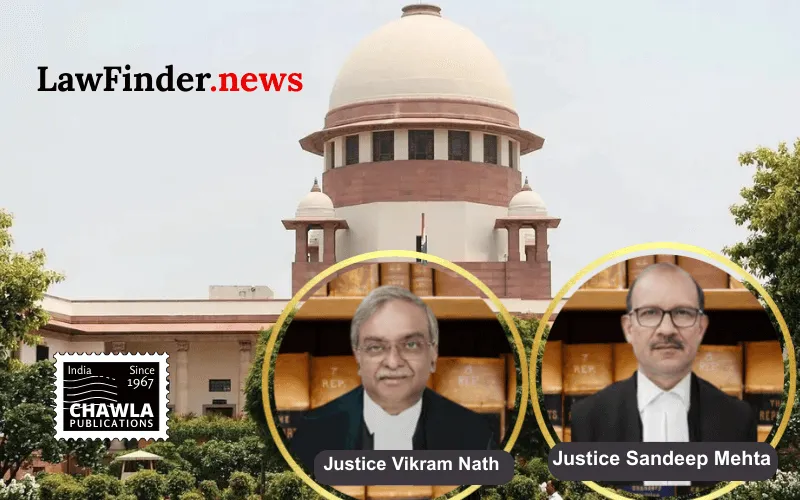
In a significant ruling, the Supreme Court of India has directed the State of Rajasthan to formulate a comprehensive policy for the inclusion of Rajasthani language in its educational systems. The judgment, delivered by Justices Vikram Nath and Sandeep Mehta, underscores the constitutional and pedagogical importance of imparting education in the mother tongue or regional language, as emphasized by the National Education Policy, 2020.
The appellants, Padam Mehta and others, approached the Supreme Court challenging the Rajasthan High Court’s dismissal of their Public Interest Litigation. They sought directives for the inclusion of Rajasthani language in the recruitment syllabus for teachers and as a medium of instruction in schools. The Supreme Court acknowledged the broader implications of the issue, transcending the confines of specific examinations, and touching upon fundamental constitutional rights and educational inclusivity.
The judgment highlights the historical and constitutional significance of language as central to meaningful education. Articles 19(1)(a), 21A, and 350A of the Constitution, alongside the Right to Education Act, 2009, were pivotal in the Court's decision. These provisions collectively affirm the right to receive education in a comprehensible language, thereby ensuring quality education that is inclusive and accessible.
The Supreme Court criticized the State’s inertia and its reliance on the exclusion of Rajasthani from the Eighth Schedule of the Constitution as a justification for non-inclusion in educational curricula. It emphasized that the absence of Rajasthani in the Schedule should not impede its recognition as a regional language for educational purposes.
The Court has directed the State to progressively adopt Rajasthani as a medium of instruction at foundational stages and eventually extend it to higher levels of schooling. This directive is aimed at rectifying the existing policy void and ensuring that constitutional and policy mandates are operationalized effectively.
This landmark judgment is expected to pave the way for linguistic inclusivity and cultural recognition in the educational landscape of Rajasthan, setting a precedent for other states to follow.
Statutory provision(s): Articles 19(1)(a), 21A, 350A of the Constitution of India, Right to Education Act, 2009, National Education Policy, 2020.
Padam Mehta v. State of Rajasthan, (SC) : Law Finder Doc id # 2897080