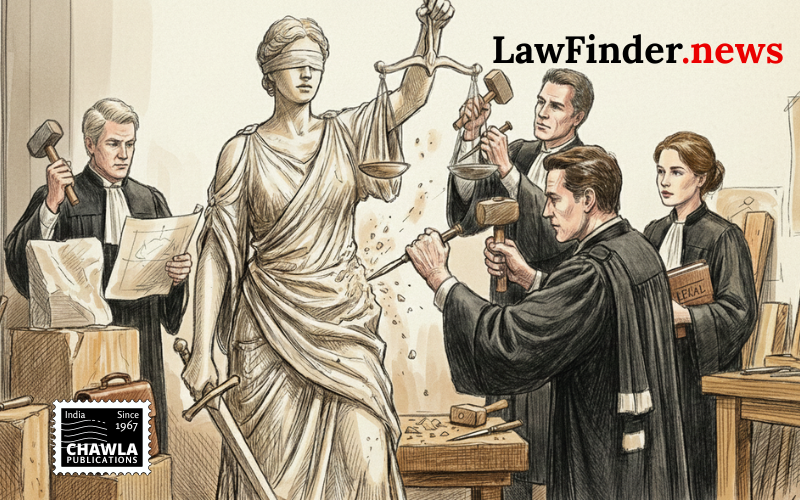
Landmark PIL challenges exclusion of women aged 10-50 from Sabarimala Temple; key issues on religious practice, gender discrimination, and statutory rules to be examined by Constitution Bench.
In a significant development in the long-standing controversy surrounding the Sabarimala Temple in Kerala, the Supreme Court of India, on October 13, 2017, passed an order referring the case to a larger Bench for an authoritative decision on the constitutionality of the ban on women aged between 10 and 50 years from entering the temple premises.
The public interest litigation was filed by the Indian Young Lawyers Association and others under Article 32 of the Constitution, challenging the prohibition on women of menstruating age from entering the Sabarimala Temple, contending that it violates fundamental rights under Articles 14 (Right to Equality), 15 (Prohibition of discrimination on grounds of sex), 25 (Freedom of religion), and 26 (Right of religious denominations to manage their affairs).
Background:
The Kerala Hindu Places of Public Worship (Authorisation of Entry) Rules, 1965, specifically Rule 3(b), prohibits women "at such time during which they are not by custom and usage allowed to enter a place of public worship" from entering such places. The Travancore Devaswom Board, which administers the Sabarimala Temple, issued notifications enforcing this rule, barring women aged 10-50 on the basis that the presiding deity Lord Ayyappa is a celibate deity (Naishtika Brahmachari), and that this practice is an essential religious custom.
The Kerala High Court upheld the ban, ruling that it is based on long-standing custom and usage, and not violative of constitutional provisions relating to equality or freedom of religion. The High Court held that the restriction is confined to women of a particular age group and not on women as a class, thus not amounting to discrimination under Articles 15 or 26.
Key Contentions:
Petitioners argued that the ban is unconstitutional as it violates gender equality and freedom to worship, and that the temple is not a separate religious denomination but a public Hindu temple regulated by a statutory body receiving state funds. They challenged the constitutional validity of Rule 3(b) for discriminating against women on the ground of sex and biological factors.
Respondents, including the State of Kerala and the Devaswom Board, contended that the practice is an integral and essential part of the religious denomination of Lord Ayyappa devotees. They argued that the rule reflects religious customs protected under Articles 25 and 26, and that the restriction does not constitute discrimination but is based on religious morality and tradition.
Supreme Court’s Observations:
The Supreme Court noted the complex interplay between fundamental rights of equality and freedom of religion and the right of religious denominations to manage their own affairs. It recognized significant constitutional questions regarding the scope of discrimination based on biological factors exclusive to women, the essential religious practices under Articles 25 and 26, and the validity of statutory rules permitting such restrictions.
The Court framed five crucial questions for consideration:
1. Whether exclusion based on biological factors exclusive to women amounts to impermissible discrimination violating Articles 14, 15, and 17.
2. Whether the exclusion constitutes an essential religious practice protected under Article 25.
3. Whether the Sabarimala Temple constitutes a distinct religious denomination entitled to manage its affairs under Article 26.
4. Whether Rule 3 of the Kerala Hindu Places of Public Worship Rules permits banning women aged 10-50 and whether such a ban violates Articles 14 and 15(3).
5. Whether Rule 3(b) is ultra vires the Kerala Hindu Places of Public Worship Act, 1965 and inconsistent with fundamental rights.
The Court directed the matter to be placed before the Chief Justice for constitution of a larger Bench to deliberate on these complex constitutional issues.
Implications:
This referral signals a critical examination of the conflict between religious customs and constitutional mandates of equality and non-discrimination. The case has garnered national attention for its implications on gender rights, religious freedoms, and state regulation of religious institutions. The forthcoming larger Bench judgment is expected to provide clarity on the constitutional limits of religious practices that restrict fundamental rights and will have far-reaching consequences for similar cases across India.
Statutory provisions
Kerala Hindu Places of Public Worship (Authorisation of Entry) Act, 1965 Section 3, Section 4; Kerala Hindu Places of Public Worship (Authorisation of Entry) Rules, 1965 Rule 3(b); Constitution of India Articles 14, 15, 17, 25, 26, 32
Indian Young Lawyers Association v. State of Kerala (SC) : Law Finder Doc Id # 908649