Supreme Court rules that the right to travel abroad under Article 21 is not absolute, emphasizes need for a balance between individual liberty and societal interest in justice administration.
In a significant ruling, the Supreme Court of India set aside the High Court of Telangana's decision permitting Seesa Santosh, an accused in a criminal case, to travel to the United States for medical treatment. The Supreme Court emphasized that while the right to personal liberty under Article 21 of the Constitution includes the right to travel abroad, it is not an unqualified right and can be subject to reasonable restrictions.
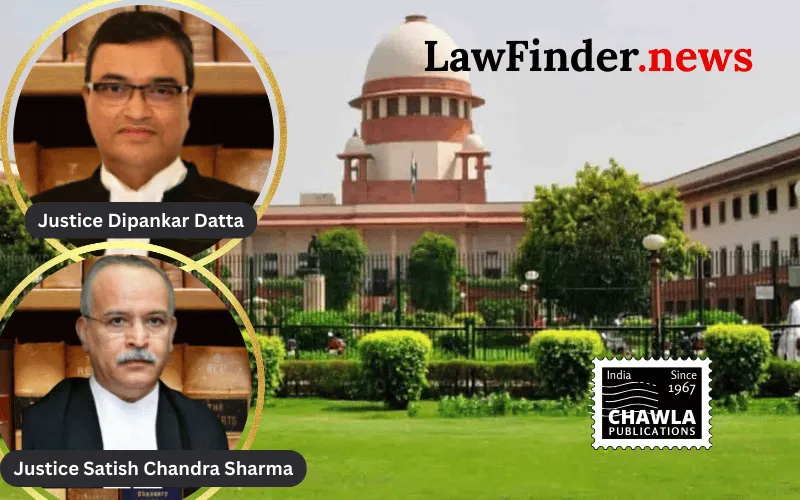
The bench, comprising Justices Dipankar Datta and Satish Chandra Sharma, highlighted the need to balance individual rights with societal interest in ensuring effective administration of criminal justice. The apex court pointed out that permitting the accused to travel abroad, especially when comparable medical facilities are available in India, was an indulgence by the High Court that failed to consider the broader societal implications and the appellant's right to a speedy trial.
The case traces back to a complaint lodged by Seesa Santosh in 2014 regarding his father's suspicious death, leading to a series of legal proceedings against the respondent, who has been accused of conspiracy and abetment to suicide. The respondent had sought to travel to the USA citing medical reasons, but the Supreme Court noted that the trial has been delayed for nearly a decade due to various legal maneuvers by the accused.
The Supreme Court's judgment underlines that the fundamental right to personal liberty must be balanced with societal interests and the effective administration of justice. It directed that the accused must seek permission from the Sessions Court for any future travel abroad, ensuring that his presence in the country is secured for the continuation of the trial. The court also mandated coordination between civil, police, and airport authorities to prevent any unauthorized travel by the accused.
This ruling reaffirms the judiciary's stance on maintaining a balance between individual liberties and societal responsibilities, especially in the context of criminal justice.
Statutory provision(s): Article 21 of the Constitution of India, Section 442 of the Bharatiya Nagarik Suraksha Sanhita, 2023, Sections 120-B, 306, 34 of IPC, Passports Act, 1967
Seesa Santosh v. State of Telangana, (SC) : Law Finder Doc id # 2915264