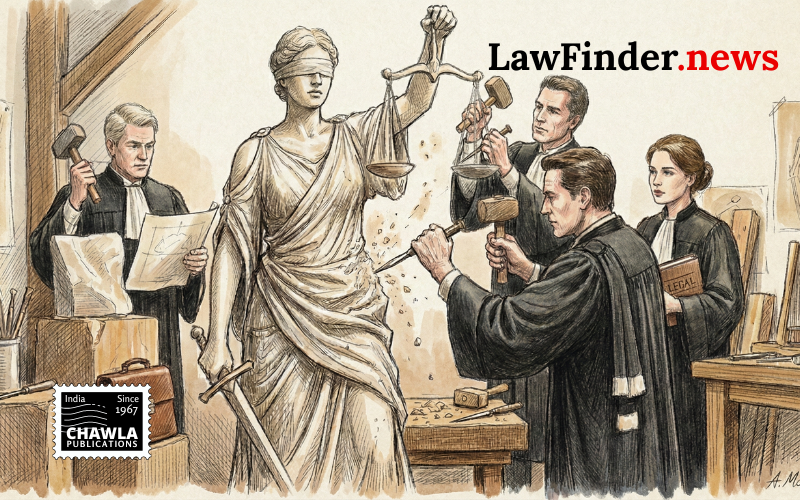
Rule 7 of Ahmedabad Police Rules under Bombay Police Act, 1951 declared void for arbitrary discretion violating Article 19(1)(b) of the Constitution; Court affirms citizens’ right to hold meetings subject to reasonable regulation.
In a landmark judgment delivered on September 15, 1972, the Supreme Court of India, sitting as a larger bench, in the case of Himat Lal K. Shah v. Commissioner of Police, Ahmedabad, has struck down Rule 7 of the Rules framed by the Commissioner of Police, Ahmedabad, under Section 33(1)(o) of the Bombay Police Act, 1951. The rule mandated that no public meeting, with or without a loudspeaker, shall be held on public streets without prior written permission from the police authority.
The appellant, Himat Lal K. Shah, had applied for permission to hold public meetings in Ahmedabad in connection with the All India Students Federation strike in September 1969. His applications were refused on grounds that included late submission and concerns about law and order due to previous disturbances. He challenged the refusal and the constitutional validity of the relevant provisions under the Bombay Police Act and the rules framed thereunder, asserting that they violated his fundamental rights under Articles 19(1)(a) and 19(1)(b) of the Constitution of India.
The Supreme Court thoroughly examined the nature of the statutory powers conferred by Section 33(1)(o) of the Bombay Police Act, which empowers the Commissioner and District Magistrate to make rules regulating assemblies and processions on streets. The Court held that the term ‘regulate’ includes prescribing prior permission for meetings but does not inherently confer the power to prohibit meetings altogether.
Importantly, the Court recognized the fundamental right of citizens to assemble peacefully and hold public meetings, a right flowing from Article 19(1)(b). However, this right is not absolute and can be subjected to reasonable restrictions in the interest of public order. The Court emphasized that the State’s regulatory powers must be exercised with clear guidelines to prevent arbitrary or discriminatory action by authorities.
While upholding the rule-making power under the Bombay Police Act, the Court struck down Rule 7 as unconstitutional because it conferred unfettered discretionary power on the police officer to grant or refuse permission without any guiding principles or requirement to communicate reasons. Such a vague and arbitrary delegation was held to violate the fundamental right to freedom of assembly under Article 19(1)(b) and the right to equality under Article 14 of the Constitution.
The Court further delved into common law and statutory precedents from India and abroad, noting that while public streets are primarily dedicated for passage, the right to hold processions and public meetings has been recognized subject to regulation to prevent obstruction and maintain public peace. The judgment clarified that the right to hold meetings on public streets is not an absolute right under the common law but is protected as a constitutional right with reasonable regulation.
The ruling directs that the police authorities may frame new rules regulating public meetings with clear standards and safeguards to prevent misuse of power, ensuring that the right to peaceful assembly is not curtailed arbitrarily.
This judgment is a significant affirmation of democratic freedoms in India, balancing citizens' rights to free speech and assembly with the State’s responsibility to maintain order.
Statutory provisions
Bombay Police Act, 1951 - Section 33(1)(o), Section 33(1)(y); Constitution of India - Articles 14, 19(1)(a), 19(1)(b), 19(2), 19(3)
Himat Lal K. Shah v. Commissioner of Police, Ahmedabad, (SC) : Law Finder Doc Id # 107174