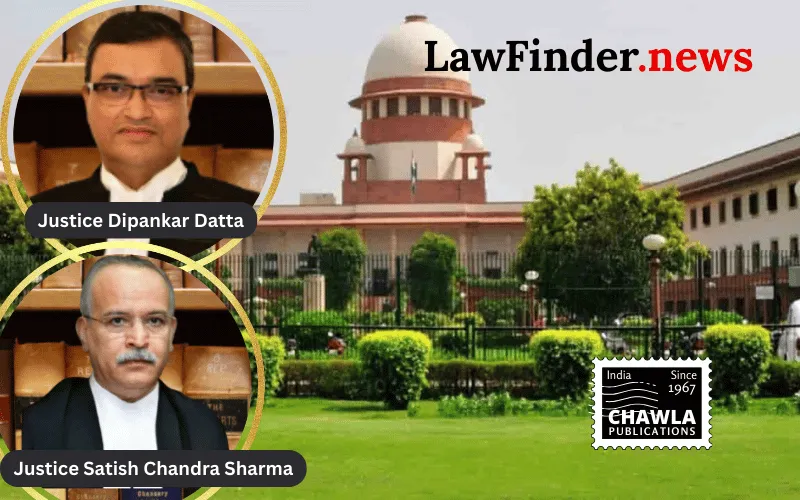
SC emphasizes differentiated approach in bail under UAPA, balancing personal liberty with national security; imposes strict conditions for release of five appellants
The Supreme Court of India on January 5, 2026, pronounced a landmark judgment in a batch of criminal appeals arising from FIR No. 59 of 2020 related to the February 2020 Delhi riots. The apex court upheld the rejection of bail applications filed by the two principal accused, Sharjeel Imam and Umar Khalid, while granting bail to five other appellants: Gulfisha Fatima, Meeran Haider, Shifa-ur-Rehman, Mohd. Saleem Khan, and Shadab Ahmed.
The case originated from a large-scale, alleged pre-planned conspiracy to orchestrate communal violence in parts of Delhi following protests against the Citizenship Amendment Act (CAA), 2019. The prosecution charged the accused under multiple provisions of the Indian Penal Code (IPC), the Unlawful Activities (Prevention) Act (UAPA), the Arms Act, and the Prevention of Damage to Public Property Act. The chargesheet depicted a phased conspiracy involving mobilisation, coordination through WhatsApp groups, speeches, fundraising, and execution of disruptive protests culminating in violent riots.
In a detailed judgment, the Court underscored the constitutional tension between the right to personal liberty under Article 21 and the State’s obligation to safeguard national security and public order. It clarified that prolonged pre-trial incarceration raises serious constitutional concerns but does not automatically override statutory restrictions under special laws like the UAPA. The Court emphasized the need for a calibrated, accused-specific inquiry at the bail stage, focusing on the prima facie truth of accusations under Section 43D(5) of the UAPA.
Highlighting the differentiated roles of the accused, the Court found that Sharjeel Imam and Umar Khalid occupied a central and formative position in the conspiracy, involved in planning, mobilisation, and strategic direction. The material against them included digital evidence, protected witness statements, and speeches advocating disruptive chakka jams and coordinated protests aimed at paralyzing civic life. The Court held that these allegations satisfy the statutory threshold, warranting denial of bail despite the prolonged custody and trial delay.
Conversely, the five appellants granted bail were characterized as local-level facilitators, financiers, or operational coordinators whose roles, while significant, did not amount to conceptual leadership or strategic command. The Court noted the absence of recoveries of weapons or direct involvement in violent acts for some appellants and observed that their continued incarceration would be disproportionate given the concluded investigation and absence of necessity for custodial detention. The Court imposed stringent conditions on their release, including personal bonds, restrictions on travel, surrender of passports, periodic reporting to authorities, prohibition on contacting witnesses, and bans on public commentary related to the case or association with related organizations.
The judgment mandates expeditious conduct of trial proceedings, particularly prioritizing the examination of protected witnesses relied upon by the prosecution, to prevent undue delay and protect the constitutional guarantee of speedy trial. The Court reiterated that the present order is confined to bail considerations and does not prejudice the merits of the case or the eventual outcome.
The judgment represents a nuanced application of law balancing individual liberty against collective security, stressing that the statutory regime under the UAPA must operate with disciplined judicial scrutiny while upholding constitutional safeguards. It also affirms the principle of parity in bail matters, ensuring that similarly situated accused are treated equitably based on their role and the evidence against them.
Statutory provision(s): Indian Penal Code Sections 120B, 147, 148, 149, 153A, 186, 201, 212, 295, 302, 307, 341, 353, 395, 420, 427, 435, 436, 452, 454, 468, 471, 34; Unlawful Activities (Prevention) Act, 1967 Sections 13, 15, 16, 17, 18, 43D(5); Arms Act Sections 25, 27; Prevention of Damage to Public Property Act Sections 3, 4; Code of Criminal Procedure Sections 207, 437
Gulfisha Fatima v. State (Govt. of NCT of Delhi), (SC) : Law Finder Doc Id # 2833291