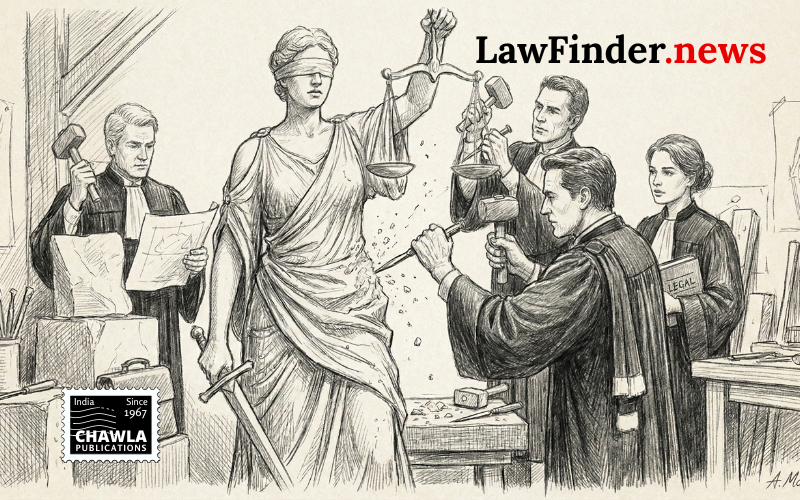
Landmark Judgment Defines “Intention to Inflict Bodily Injury” and Its Role in Establishing Murder without Direct Intent to Kill
In a significant judgment delivered on March 11, 1958, a three-judge bench of the Supreme Court of India, comprising Justices S.J. Imam, P.B. Gajendragadkar, and Vivian Bose, dismissed the appeal of Virsa Singh, who was convicted and sentenced to life imprisonment for the murder of Khem Singh. This decision not only upheld the lower courts’ findings but also provided a detailed analysis of the legal principles governing murder under Section 300 “thirdly” of the Indian Penal Code (IPC), 1860.
Virsa Singh was charged with murder under Section 302 IPC for inflicting a fatal spear wound on Khem Singh. The wound was described by medical experts as a deep, punctured injury on the lower left side of the abdomen, which penetrated the abdominal wall and caused the intestines to protrude. Khem Singh succumbed to the injury approximately 21 hours later, with the cause of death attributed to peritonitis resulting from the grievous wound.
The appellant argued that the prosecution failed to establish an intention to cause bodily injury sufficient to cause death in the ordinary course of nature—a requirement under Section 300 “thirdly” of the IPC to constitute murder.
Virsa Singh v. State of Punjab, (SC) : Law Finder Doc Id # 113449