Supreme Court Dismisses Dhanlaxmi Bank's Appeal, Emphasizes Proper Forum for Contractual Disputes
In a significant ruling, the Supreme Court of India has upheld the decision of the National Company Law Appellate Tribunal (NCLAT) by dismissing the appeal filed by Dhanlaxmi Bank Limited against Mohammed Javed Sultan and others. The case revolved around the invocation of Section 7 of the Insolvency and Bankruptcy Code, 2016 (IBC), which the bank attempted to use as a mechanism for debt recovery.
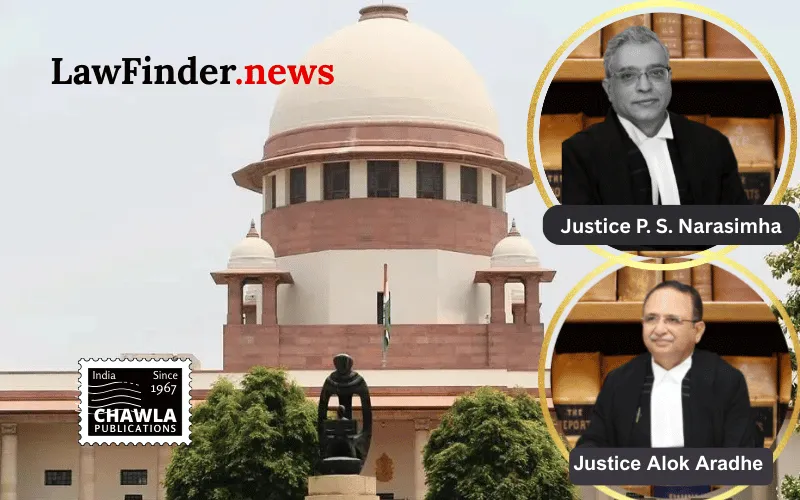
The Supreme Court, with Justices Pamidighantam Sri Narasimha and Alok Aradhe presiding, reiterated that the IBC is designed as a collective insolvency resolution mechanism, not a forum for adjudicating individual contractual disputes. The ruling emphasized that the invocation of the IBC should not be used as a coercive tool for debt recovery, particularly in cases where contractual obligations are intertwined with third-party responsibilities.
The case dates back to a loan sanctioned by Dhanlaxmi Bank to Emerald Mineral Exim Pvt. Ltd. for the purchase of a property. The loan amount was directly disbursed to a builder under a quadripartite agreement, which included multiple parties and obligations. When the borrower defaulted, the bank classified the account as a Non-Performing Asset (NPA) and sought recovery through various legal avenues, including the IBC.
However, the NCLAT found that the bank did not directly disburse the loan to the borrower, disqualifying it as a "Financial Creditor" under the IBC. The tribunal also noted that the bank's actions amounted to forum shopping, as it had already initiated proceedings under the Recovery of Debts Due to Banks & Financial Institutions Act, 1993, before the Debt Recovery Tribunal (DRT).
The Supreme Court concurred with the NCLAT's assessment, noting that the disbursement of funds was intrinsically linked to the builder's contractual obligations. The court highlighted that the transaction was not a straightforward financial lending arrangement but rather a complex contractual matter, more suited for resolution by the DRT.
The ruling underscores the importance of distinguishing between genuine insolvency cases and those involving contractual disputes. It reaffirms the principle that the IBC should not be misused as a debt recovery tool in cases where contractual obligations are the crux of the dispute.
The Supreme Court's decision to dismiss the appeal and uphold the NCLAT's ruling reinforces the need for financial institutions to pursue appropriate legal channels in resolving disputes that are predominantly contractual in nature.
Statutory provision(s): Insolvency and Bankruptcy Code, 2016 - Sections 7, 65; Recovery of Debts Due to Banks and Financial Institutions Act, 1993; Companies Act, 1956 - Sections 433, 434, 439.
Dhanlaxmi Bank Limited v. Mohammed Javed Sultan, (SC) : Law Finder Doc id # 2894403