Judicial permissions and safeguards allow passport renewal despite pending criminal cases, reinforcing personal liberty under Article 21.
In a landmark ruling, the Supreme Court of India has directed the renewal of Mahesh Kumar Agarwal's passport for a regular period of ten years, despite ongoing criminal proceedings and a conviction. This decision underscores the judiciary's role in balancing individual rights with statutory restrictions under the Passports Act, 1967.
The case centered around Agarwal, an Indian citizen whose passport expired while criminal proceedings were pending against him, including charges under the Unlawful Activities (Prevention) Act, 1967. Despite obtaining 'no objection' certificates from the Delhi High Court and the NIA Court in Ranchi, the Regional Passport Office in Kolkata refused renewal, citing statutory bars under Section 6(2)(f) of the Passports Act.
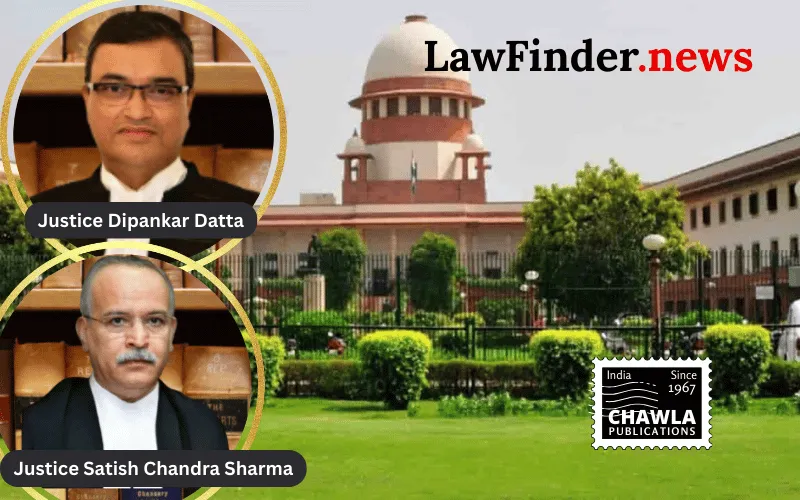
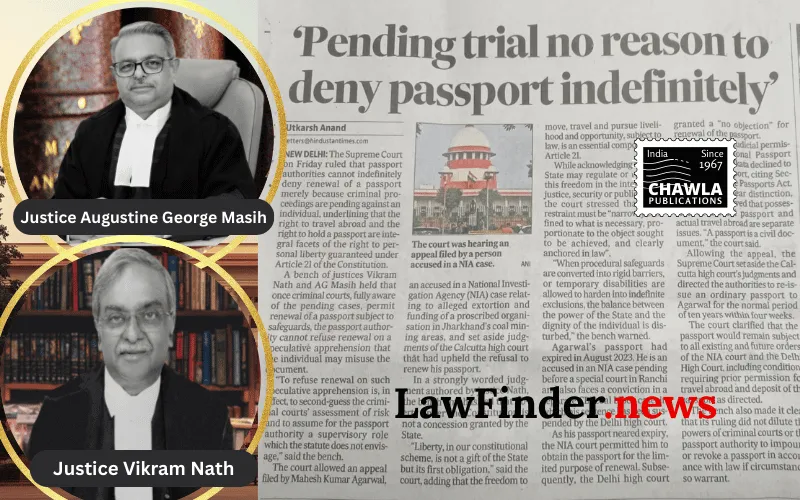
The Supreme Court, led by Justices Vikram Nath and Augustine George Masih, highlighted that the mere pendency of criminal proceedings does not automatically prevent passport renewal. The court emphasized the importance of judicial supervision, noting that criminal courts can impose conditions on passport renewal, such as prior travel permissions and redeposit of the passport, thereby satisfying statutory concerns.
The judgment reinforces the principle that the right to hold a passport and travel abroad is part of the personal liberty guaranteed under Article 21 of the Constitution. Restrictions must be fair, just, and reasonable, and an indefinite denial of passport renewal is deemed disproportionate.
The Supreme Court criticized the approach of the Calcutta High Court, which viewed Section 6(2)(f) as an absolute bar unless a criminal court authorized a specific trip abroad. The court clarified that judicial permissions for passport renewal, with conditions on travel, adequately address concerns under Section 6(2)(f), allowing for renewal without requiring a detailed travel plan.
The ruling also distinguished between individuals facing trial and those convicted but pursuing appeals. The court noted that a conviction does not reinforce the bar under Section 6(2)(f), and renewal is permissible absent statutory bars under Sections 6(2)(e) and 6(2)(f).
The Supreme Court's decision is a significant affirmation of the judiciary's role in safeguarding personal liberties against administrative overreach, ensuring that statutory provisions are applied fairly and reasonably.
Bottom Line:
The issuance or renewal of a passport for individuals facing criminal proceedings must consider exemptions under Section 22 of the Passports Act and GSR 570(E), ensuring judicial safeguards are adequately addressed.
Statutory provision(s): Passports Act, 1967 Sections 5, 6(2)(f), 7, 8, 9, 10, 22; Unlawful Activities (Prevention) Act, 1967 Section 17; Criminal Law Amendment Act, 1908 Section 17; Indian Penal Code, 1860 Sections 120B, 201; GSR 570(E) notification; Article 21 of the Constitution of India.
Mahesh Kumar Agarwal v. Union of India, (SC) : Law Finder Doc Id # 2824363