Lok Prahari's petition for automatic disqualification on conviction dismissed by Apex Court
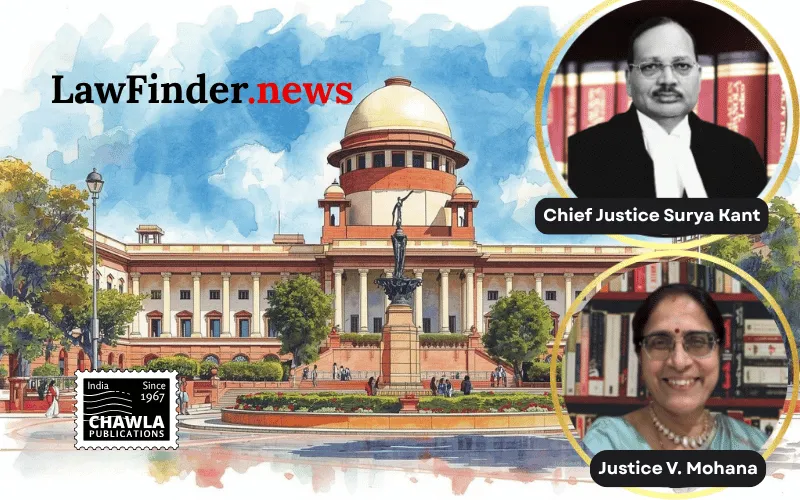
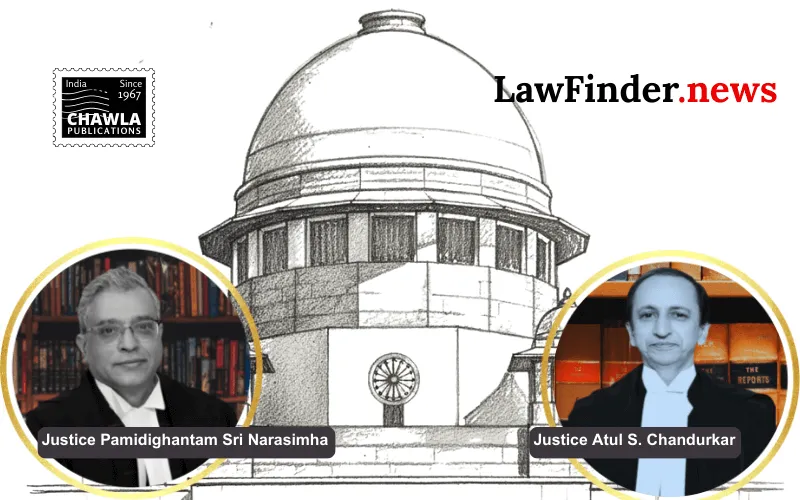
The Supreme Court of India dismissed the writ petition filed by Lok Prahari, an organization focused on public governance, seeking automatic disqualification of Members of Parliament or State Legislatures upon conviction for offenses under Section 8 of the Representation of People Act, 1951. The judgment, delivered by a bench comprising Chief Justice Dipak Misra, Justice A.M. Khanwilkar, and Justice Dr. Dhananjaya Y. Chandrachud, upheld the legal precedent that a stay of conviction by an appellate court can suspend the disqualification consequences that typically follow a conviction.
Lok Prahari argued that the law does not provide for a stay of conviction and that any such stay should not wipe out disqualification retrospectively. They contended that the seat of the concerned member should be deemed vacant from the date of conviction, regardless of any appellate court's stay order. The petition cited Articles 101(3)(a) and 190(3)(a) of the Constitution, asserting that a vacancy should occur immediately upon conviction.
The Supreme Court's decision relied heavily on previous judgments, including Lily Thomas v. Union of India (2013) and Ravikant S. Patil v. Sarvabhouma S Bagali (2007), which established that the appellate court does possess the power to stay a conviction under Section 389 of the Cr.P.C., 1973. The court clarified that such a stay is an exception, meant to prevent serious prejudice, and should be applied in rare cases where the consequences of conviction are severe.
Moreover, the court affirmed that once a conviction is stayed by an appellate court, the disqualification under Section 8 of the Representation of People Act, 1951, does not operate. Thus, the individual retains their membership in the legislature until the conviction is reconsidered.
The Election Commission of India supported Lok Prahari's first prayer but highlighted that the disqualification is automatic only upon conviction without the need for a Presidential or Governor's decision. Meanwhile, the Union government opposed the petition, referencing the lack of challenge to any statutory provision and reliance on settled law.
The court also addressed procedural aspects regarding the dissemination of conviction orders to relevant authorities, noting that the Election Commission had already issued instructions for timely notification of such orders. Consequently, the court found no necessity for additional directions.
This judgment underscores the importance of judicial oversight in electoral disqualifications and reinforces the appellate court's authority to stay convictions, thereby suspending their disqualification effects. The decision is a significant affirmation of judicial power in electoral matters, ensuring that a conviction does not automatically result in disqualification without due process.
Statutory provisions:
- Article 32, 101(3)(a), 102, 102(1)(e), 104, 190(3)(a), 191, 191(1)(e), 193 of the Constitution of India, 1950
- Sections 8, 151 of the Representation of People Act, 1951
- Sections 353, 504, 506, 366, 376 of the Indian Penal Code
- Sections 389, 482 of the Code of Criminal Procedure, 1973
The Supreme Court's judgment affirms the judiciary's role in balancing disqualification consequences with the rights of individuals, ensuring that electoral integrity is maintained without compromising justice and fairness.