Balancing Vendors' Livelihood with Public Access, Supreme Court Directs Chandigarh Authorities to Ensure Compliance with Street Vendors Act, 2014
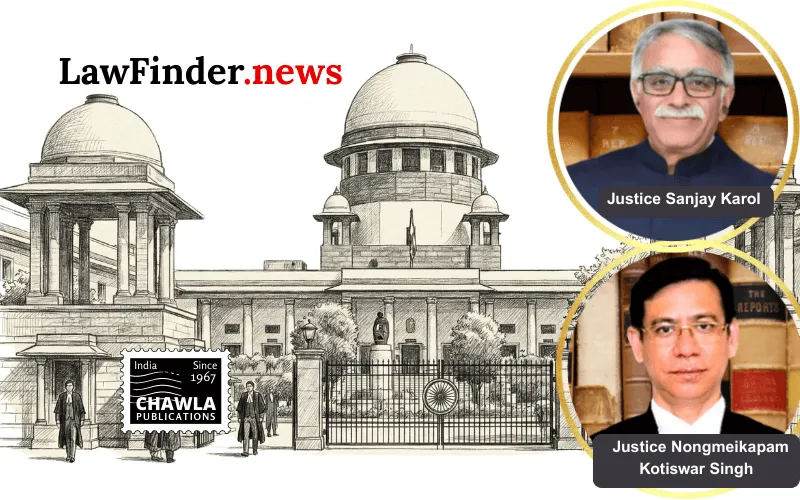
In a landmark judgment, the Supreme Court of India has reinforced the rights of street vendors, emphasizing the need for a balanced approach between vendors’ right to livelihood and the public’s right to unimpeded access to public spaces. The judgment, delivered by Justices Sanjay Karol and Nongmeikapam Kotiswar Singh, addresses the complexities of urban planning and the regulation of street vending under the Street Vendors (Protection of Livelihood and Regulation of Street Vending) Act, 2014.
The case, Malkit Singh v. State of U.T. Chandigarh, arose from an appeal against a Punjab and Haryana High Court decision that dismissed a petition seeking the removal of encroachments by street vendors. The Supreme Court granted leave and stayed the High Court's judgment, emphasizing the need for a compassionate judicial approach in matters affecting the livelihood of large populations.
The Court highlighted that the right to practice a trade or business is protected under Article 19(1)(g) of the Constitution, but it must be balanced with public interest as per Article 19(6). The judgment underscores the necessity of designated vending zones, fair relocation, and transparent licensing mechanisms to prevent forcible evictions that violate vendors' rights.
The judgment mandates that authorities must actively support vendors' transition to lawful vending zones, ensuring minimum disruption to their livelihoods. It also calls for awareness campaigns to inform the public about relocated vendors, safeguarding their customer base and livelihood.
In response to the grievance raised by the appellant, the Supreme Court noted that while efforts by the Chandigarh Municipal Corporation to remove unauthorized vendors were commendable, it was crucial to regularize such vendors by granting them space in designated zones. The Court stressed that such actions should not become punitive but should uphold the spirit of regulation and respect for the right to earn a living.
The Court directed the Chandigarh authorities to file affidavits detailing the number of applications filed and the status of pending cases, as well as efforts made to inform residents about the relocation of vendors. The matter is set for further consideration on April 27, 2026.
Bottom Line:
Regulation of street vending must strike a balance between the rights of vendors to earn a livelihood and the rights of the public to unimpeded access to public spaces. Authorities must ensure fair relocation and proper support for displaced vendors in compliance with the Street Vendors (Protection of Livelihood and Regulation of Street Vending) Act, 2014.
Statutory provision(s): Articles 19(1)(g) and 19(6) of the Constitution of India, Street Vendors (Protection of Livelihood and Regulation of Street Vending) Act, 2014, Sections 12, 21, 27
Malkit Singh v. State of U.T. Chandigarh, (SC) : Law Finder Doc id # 2880328