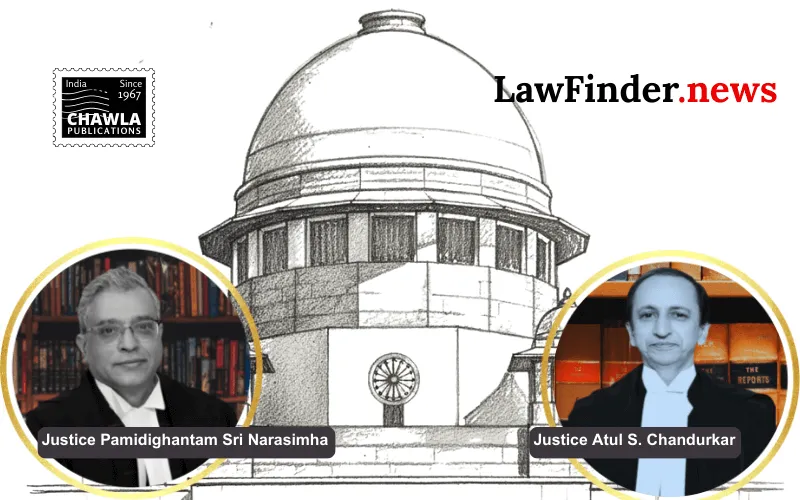
Landmark Judgment Highlights Massive Environmental Violations, Illegal Extraction, and Misuse of Mining Leases; Directs Strict Compliance, Compensation Recovery, and Tribal Welfare Funding
In a landmark judgment delivered on August 2, 2017, the Supreme Court of India, presided over by Justices Madan B. Lokur and Deepak Gupta, issued a comprehensive verdict addressing the widespread illegal mining of iron and manganese ore in the districts of Keonjhar, Sundergarh, and Mayurbhanj in Odisha. The judgment stems from writ petitions filed by Common Cause and others under Article 32 of the Constitution and follows extensive inquiries by the Central Empowered Committee (CEC) and the Justice M.B. Shah Commission appointed under the Commissions of Inquiry Act, 1952.
The Court characterized the mining scandal as involving "megabucks" and "rapacious mining," resulting in severe environmental degradation, displacement and misery for tribal communities, and substantial financial loss to the State exchequer. According to the CEC's report, approximately 2,155.117 lakh metric tonnes of iron ore and manganese ore were mined without requisite environmental clearances or beyond permitted limits, amounting to illegal extraction valued at over Rs. 17,576 crores. These figures exclude illegal mining in forest areas, which further exacerbates the problem.
Key Findings and Directions:
1. Illegal Mining and Environmental Clearances: The Court affirmed that mining without prior Environmental Clearance (EC) or Forest Clearance (FC), or mining beyond the limits authorized by such clearances, constitutes illegal mining under Section 21(5) of the Mines and Minerals (Development and Regulation) Act, 1957 (MMDR Act). Illegal mining includes activities both outside and within the leased mining area when statutory conditions are violated.
2. Validity of Environmental Clearances: The judgment clarified that ECs are mandatory for new mining projects post-January 27, 1994, and for the renewal of mining leases thereafter, regardless of expansion or modernization unless a certificate from the State Pollution Control Board (SPCB) confirms no increase in pollution load. The Court rejected the notion of retrospective ECs and held that mining operations are subordinate to EC validity.
3. Recovery of Compensation: The Court emphasized full recovery (100%) of the price of illegally mined minerals under Section 21(5) of the MMDR Act from the mining lease holders, rejecting the CEC's earlier recommendation of partial recovery. This includes compensation for illegal mining activities since the year 2000-2001 and from January 7, 1998, onwards for mining in forest lands without proper clearances.
4. Forest Conservation Act Compliance: The Court reiterated the necessity of prior approval from the Central Government under the Forest (Conservation) Act, 1980, for any non-forest activities on forest land, including mining. Mining activities in forest lands post-January 7, 1998, without FC are unlawful, attracting full compensation.
5. Joint Survey and Verification: The Court ordered a fresh joint survey involving State authorities, the Ministry of Environment and Forests (MoEF), Indian Bureau of Mines, Forest Survey of India, Geological Survey of India, and the CEC to verify the extent of mining lease boundaries and encroachments by December 31, 2017.
6. Rule 37 Violations and Raising Contracts: The Court acknowledged violations of Rule 37 of the Mineral Concession Rules, 1960, pertaining to unauthorized transfer or subletting of mining leases. It directed consideration of appointing a Committee to scrutinize raising contracts entered into by eight mining lease holders accused of violations.
7. Utilization of Recovery Funds: The judgment approved the creation and operation of a Special Purpose Vehicle (SPV) by the Government of Odisha, funded by 50% of the additional Net Present Value (NPV) recovered from mining leases, dedicated to tribal welfare and area development projects. The Court called for audited accounts and reports on the utilization of these funds to ensure transparency and benefit to affected communities.
8. Policy Recommendations: Recognizing the systemic failures that allowed rampant illegal mining, the Court directed the Union of India to revisit and update the National Mineral Policy, 2008, to establish more effective regulatory and enforcement mechanisms by December 31, 2017.
9. No Immediate CBI Inquiry: While acknowledging the severity of corruption and illegalities, the Court withheld ordering a Central Bureau of Investigation (CBI) probe at this stage, emphasizing the need for systemic reform and preventive measures to avoid recurrence across India.
Background and Proceedings:
The matter traces back to a public interest litigation by Common Cause and investigative reports by the Justice M.B. Shah Commission, which detailed widespread illegal mining practices including mining without licenses, mining beyond lease areas, environmental clearance violations, and the involvement of powerful business entities and government officials. The CEC was tasked by the Supreme Court with fact-finding and submitted detailed reports, which identified 187 mining leases in Odisha with significant statutory violations.
The Court examined the statutory framework governing mining operations, notably the MMDR Act, Mineral Concession Rules, 1960, Mineral Conservation and Development Rules, 1988, and environmental laws including the Environment (Protection) Act, 1986 and the Forest (Conservation) Act, 1980. It underscored the non-negotiable requirement of environmental and forest clearances as preconditions for lawful mining.
The Court also addressed procedural objections raised by mining lease holders regarding notices under the Commissions of Inquiry Act and held that the CEC’s fact-finding process complied with principles of natural justice.
Implications:
This judgment is a watershed moment in mining jurisprudence in India, reinforcing the primacy of environmental protection and lawful mining practices. It sends a strong message that exploitation of natural resources without requisite statutory approvals will attract severe financial consequences and legal accountability.
The directions for recovery of compensation and establishment of welfare mechanisms for tribal communities aim to mitigate the environmental and social damage caused by illegal mining. The call for policy revision and systemic reforms reflects the Court’s concern over the governance vacuum that allowed such violations.
Mining companies in Odisha and other states must ensure strict compliance with environmental and forest laws, obtain timely clearances, and adhere to mining plans to avoid legal consequences.
The judgment also emphasizes the importance of transparency, use of modern technology for monitoring mining activities, and participatory approaches for tribal welfare.
Statutory provisions
Sections 4, 5, 6, 8, 10, 12, 13, 18, 21, 23C of the Mines and Minerals (Development and Regulation) Act, 1957; Rules 22(5), 22A, 24A, 26, 27, 31, 37 of Mineral Concession Rules, 1960; Rules 9, 10, 13, 31, 37, 38, 41 of Mineral Conservation and Development Rules, 1988; Sections 2 of Forest (Conservation) Act, 1980; Section 3 of Environment (Protection) Act, 1986; Sections 8B and 8C of Commissions of Inquiry Act, 1952; Article 32 of the Constitution of India.
Common Cause v. Union of India, (SC) : Law Finder Doc Id # 885467