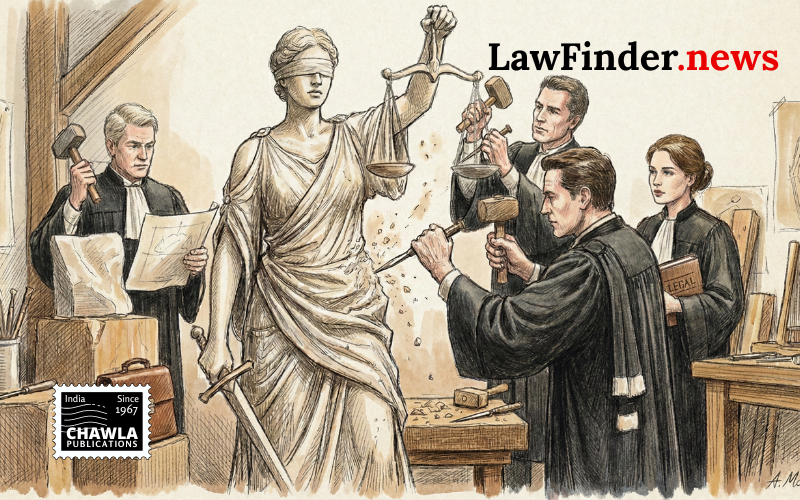
Landmark Judgment Balances Right to Health with Economic and Religious Interests, Mandates Green Crackers, Community Fireworks, and Strict Timings for Festivals
In a significant judgment delivered on October 23, 2018, the Supreme Court of India addressed the perennial issue of air pollution in the National Capital Region (NCR), especially aggravated during the festival of Diwali due to the bursting of firecrackers. The case, titled Arjun Gopal and Others v. Union of India and Others, stemmed from a writ petition filed by concerned citizens on behalf of infants residing in Delhi who are vulnerable to pollution-related health hazards.
The court acknowledged the alarming deterioration in air quality during Diwali, where particulate matter (PM2.5) levels spike to several times above World Health Organization standards, causing severe and often irreversible health problems including asthma, bronchitis, neurological impairments, and cardiovascular diseases. Citing expert medical affidavits and scientific studies, the Court highlighted the disproportionate harm to children and vulnerable populations.
While recognizing that firecrackers are traditionally associated with religious practices, the Court held that Article 25 of the Constitution (freedom of religion) is subordinate to the fundamental right to life under Article 21, which encompasses the right to a clean and healthy environment. Thus, religious practices detrimental to public health do not enjoy constitutional protection. The Court underscored that environmental protection, reflected under Articles 48A and 51A(g), takes precedence over the fundamental right to carry on business under Article 19(1)(g).
The Court balanced multiple competing interests: protecting the health of millions of residents, safeguarding the economic interests of the firecracker industry (which employs approximately five lakh families and generates revenue of around ₹6,000 crores annually), and respecting cultural traditions. It ruled that a complete ban on firecrackers might be too drastic at present, given the lack of conclusive long-term studies, but stringent regulatory measures are imperative.
Key directions issued include:
- Only manufacture, sale, and use of “green crackers” or reduced-emission firecrackers that significantly lower particulate emissions and noise pollution are permitted.
- Firecrackers containing harmful chemicals like barium salts and heavy metals such as lithium, antimony, mercury, arsenic, and lead are banned.
- The production, sale, and use of joined firecrackers (series crackers or laris) are prohibited due to their high pollution potential.
- Fireworks are to be burst only during restricted time windows (8:00 p.m. to 10:00 p.m. on Diwali and similar festivals, and a short period around midnight on Christmas and New Year).
- Community firecrackers displays in designated areas are encouraged in lieu of individual bursting to reduce pollution and noise.
- Strict enforcement of existing Explosive Rules, including licensing and safety standards, with suspension of licenses for violations.
- Online sale of firecrackers through e-commerce platforms is banned.
- Extensive public awareness campaigns about health hazards linked to fireworks are mandated, especially targeting schools and educational institutions.
- Monitoring of air quality parameters, including metals linked to fireworks, will be conducted by the Central Pollution Control Board (CPCB) and State Pollution Control Boards.
- Police and district authorities are held responsible for enforcement, with personal liability for violations.
The Court also endorsed the precautionary principle, a cornerstone of environmental jurisprudence, which holds that lack of absolute scientific certainty is no reason to delay preventive measures against potential environmental harm. It reversed the burden of proof onto manufacturers and traders to demonstrate that their products comply with stringent environmental standards.
The judgment reflects a nuanced, phased approach aiming to reduce air pollution while accommodating economic and cultural considerations. The Court emphasized that further tightening of restrictions might follow as more scientific data on the health impacts of firecrackers emerges.
This decision marks a milestone in India’s environmental law, affirming the primacy of the right to life and health over commercial and religious freedoms when public health is at stake. It also sets a precedent for other states to consider similar measures to address air pollution.
Statutory provisions
Constitution of India Articles 21, 25, 19(1)(g), 48A, 51A(g); Explosives Act, 1884; Explosive Rules, 2008; Environment (Protection) Rules, 1986
Arjun Gopal v. Union of India (SC) : Law Finder Doc Id # 1267933