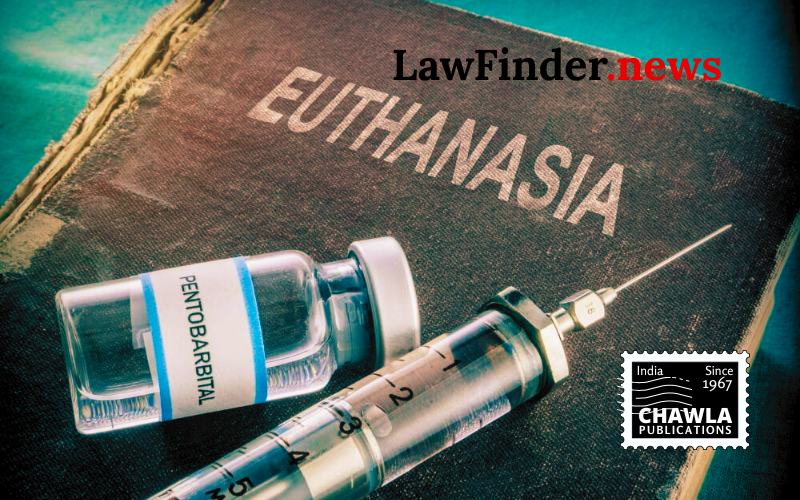
The judgment in the case of Aruna Ramchandra Shanbaug v. Union of India (2011), passed by the Supreme Court of India, extensively addresses the complex issue of mercy killing (euthanasia) under Indian law, focusing particularly on the legality and conditions under which mercy killing, especially passive euthanasia, can be allowed.
Here is an elaborate analysis and step-by-step guide based on the judgment:
1. Types of Euthanasia: Active vs. Passive
- Active Euthanasia: Direct action taken to cause the death of a patient, such as administering a lethal injection.
- This is illegal in India and amounts to a criminal offence under Sections 302 (murder), 304 (culpable homicide not amounting to murder) and 306 (abetment of suicide) of the Indian Penal Code.
- Physician-assisted suicide also falls under criminal abetment of suicide.
- Passive Euthanasia: Withholding or withdrawing medical treatment or life support which sustains life, allowing the patient to die naturally.
- This can include withholding antibiotics, discontinuing life support machines, or withdrawing artificial feeding.
- The judgment held that passive euthanasia can be permitted under strict conditions, even though active euthanasia remains illegal.
2. Voluntary vs. Non-Voluntary Euthanasia
- Voluntary Euthanasia: Consent is given by the patient.
- No legal difficulty exists when a competent patient refuses treatment.
- Non-Voluntary Euthanasia: Patient is incompetent to give consent (e.g., in coma or persistent vegetative state).
- This poses difficult ethical and legal challenges.
3. Legal Position in India
- The Supreme Court reaffirmed the Gian Kaur v. State of Punjab (1996) decision that the right to life under Article 21 does not include the right to die.
- However, the Court recognized that in certain cases of terminal illness or permanent vegetative state (PVS) where death is imminent and unavoidable, passive euthanasia may be allowed as a part of the right to die with dignity.
- The Court strongly recommended that active euthanasia is illegal unless legislation permits it.
4. Who Can Decide on Mercy Killing?
- If the patient is competent, their informed consent is required.
- If incompetent (as in the Aruna Shanbaug case), the decision to withdraw life support must be taken by:
- Parents, spouse, or other close relatives,
- Or a next friend (a person or body acting on behalf of the patient),
- Or the attending doctors/hospital staff,
- But such decision must be bonafide and in the best interest of the patient.
- In Aruna’s case, her relatives were not involved, and the hospital staff who cared for her for decades were recognized as her "next friend".
5. Role of the Court
- The High Court, exercising jurisdiction under Article 226 of the Constitution, has the power to grant approval for withdrawing life support in cases involving incompetent persons.
- The Court acts as parens patriae (guardian of those who cannot care for themselves), ensuring protection against misuse and safeguarding patient interests.
- The Court must consider:
- Medical opinion,
- Wishes of relatives or next friends,
- Ethical considerations,
- Risks of misuse (such as for property grabbing).
- The Court laid down a procedure for such applications:
- Constitute a Bench of at least two Judges,
- Appoint a medical committee of three reputed doctors (neurologist, psychiatrist, physician) to examine the patient and submit a report,
- Issue notice to State, relatives, and next friends,
- Hear parties and give reasoned judgment.
6. Medical and Ethical Considerations
- The medical report on Aruna Shanbaug confirmed that she was in a permanent vegetative state for 37 years, with no chance of regaining consciousness.
- She was not brain dead, as her brainstem functions continued, enabling breathing and digestion without mechanical support.
- The KEM Hospital staff provided exemplary care, had developed emotional bonding, and wished to continue life support.
- The Court emphasized principles of patient autonomy and beneficence but recognized the complexity when the patient cannot express wishes.
7. Outcome of the Case
- The Court dismissed the petition for mercy killing, holding that:
- Passive euthanasia may be permitted in India,
- But only under strict safeguards,
- And only with High Court approval following the laid down procedure.
- Since the hospital staff wished to continue care, and no close relatives objected, the Court did not allow withdrawal of life support.
Summary Answer: Is Mercy Killing Allowed in India?
- Active euthanasia (direct killing) is illegal and a criminal offence under Indian law.
- Passive euthanasia (withholding or withdrawing life support) is permissible but under strict conditions, and must be approved by the High Court under Article 226 of the Constitution.
- The decision must be made in the best interest of the patient, with due weight to medical opinion and the views of close relatives or next friend.
- The Court exercises the parens patriae jurisdiction to protect incompetent patients and prevent misuse.
- Until legislation is enacted, the procedure laid down by the Supreme Court in Aruna Shanbaug case (2011) governs passive euthanasia in India.
Step-by-Step Guide for Mercy Killing (Passive Euthanasia) in India:
1. Determine Patient Competency:
- If competent, obtain informed consent from the patient to withdraw treatment.
- If incompetent, identify legal representatives (parents, spouse, relatives, next friend, or hospital staff).
2. Medical Assessment:
- Obtain a detailed medical report from a committee of doctors (neurologist, psychiatrist, physician) on the patient’s condition and prognosis.
3. Decision Making:
- The surrogate decision-maker(s) must act bonafide and in the best interest of the patient.
4. Judicial Approval:
- File a petition before the concerned High Court under Article 226 seeking approval for withdrawal of life support.
- The Court will constitute a Bench, seek medical opinion, hear parties including State and relatives, and then decide.
5. Safeguards:
- The Court’s decision should be based on the best interest of the patient, medical evidence, and careful evaluation to prevent abuse.
6. Implementation:
- If the High Court approves, life support may be withdrawn, allowing the patient to die naturally.
In Conclusion:
The Supreme Court judgment in Aruna Shanbaug v. Union of India (2011) permits passive euthanasia under stringent safeguards and judicial oversight but prohibits active euthanasia. Mercy killing in India is thus allowed only in the form of passive euthanasia with High Court approval, respecting medical ethics and protecting vulnerable patients from misuse.
References:
- - Aruna Ramchandra Shanbaug v. Union of India, (2011) 4 SCC 454
- - Gian Kaur v. State of Punjab, (1996) 2 SCC 648
- - Airedale NHS Trust v. Bland, (1993) All ER 82 (HL)
- - Indian Penal Code Sections 302, 304, 306, 309
- - Article 21 and Article 226 of the Constitution of India
Aruna Ramchandra Shanbaug v. Union of India (SC) : Law Finder Doc Id # 246622