Tribunal's Authority to Correct Mistakes Affirmed, Dismissal of Revenue's Appeal
In a significant ruling, the Telangana High Court has dismissed an appeal by the Commissioner of Income Tax (TDS), Hyderabad, thereby upholding the decision of the Income Tax Appellate Tribunal (ITAT) in a case involving M/s Jaypeem Granites (P) Ltd. The court affirmed the ITAT's power to rectify mistakes under Section 254(2) of the Income Tax Act, 1961, clarifying that such authority does not equate to a review of earlier judgments.
The case revolved around the classification of certain transactions as 'deemed dividends' under Section 2(22)(e) of the Act, requiring tax deduction at source, a contention raised by the revenue authorities. Initially, the ITAT had allowed appeals both by the assessee and the revenue, creating contradictory conclusions on identical issues. This prompted M/s Jaypeem Granites to file a rectification application, arguing that the ITAT’s order was inconsistent.
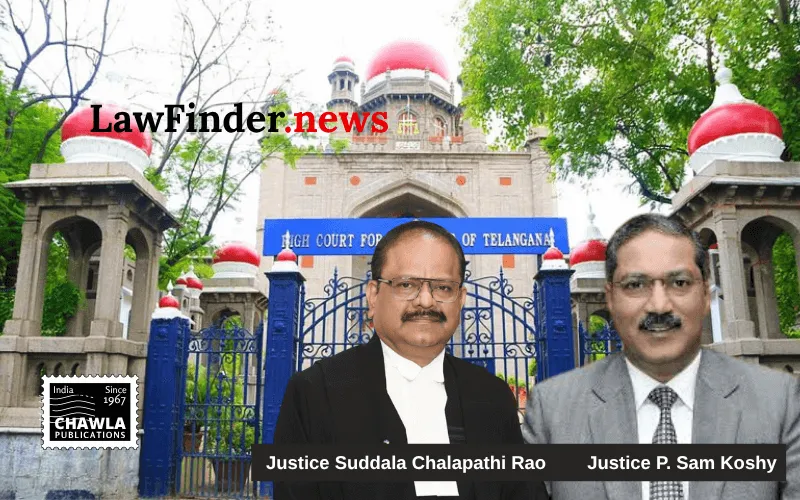
The High Court, presided by Justices P. Sam Koshy and Suddala Chalapathi Rao, supported the ITAT's decision to rectify its earlier order, stating that the tribunal had merely corrected an apparent mistake rather than re-evaluating evidence or reviewing its previous order. The court noted that the ITAT's correction was necessary to resolve inherent contradictions within its original order, which had allowed appeals from both sides on the same issues.
This decision reinforces the scope of the ITAT's rectification powers, asserting that it can address errors apparent on the record without engaging in a substantive review. The court emphasized that such rectifications are permissible when there are clear and self-evident mistakes, not requiring extensive reasoning or re-evaluation of evidence.
The High Court also criticized the selective challenge by the revenue, noting that the ITAT's rectification orders for subsequent assessment years had attained finality without contest. This inconsistency further weakened the revenue's position, leading to the dismissal of their appeal.
The judgment highlights the importance of clarity and consistency in appellate decisions and underscores the ITAT's role in maintaining the integrity of its orders by rectifying errors that are apparent and undisputed.
Bottom line:-
Income Tax Act, 1961 - Scope of rectification under Section 254(2) - Tribunal has power to rectify mistakes apparent on the face of the record but cannot review or reappraise evidence under the guise of rectification.
Statutory provision(s): Income Tax Act, 1961 Sections 2(22)(e), 194, 201(1), 201(1A), 254(2)