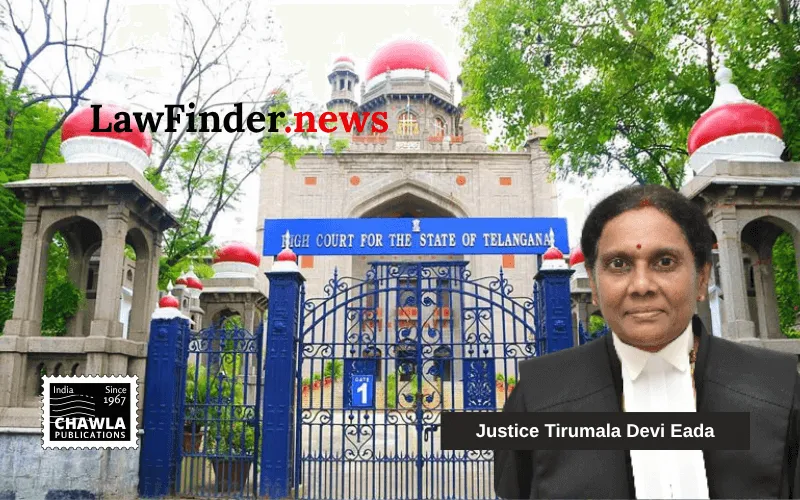
Court Refuses to Quash Proceedings Against Admin for Alleged Messages Provoking Communal Disharmony and Defamation
In a significant ruling, the Telangana High Court has refused to quash the criminal proceedings against Lakakula Ayappa, the administrator of a WhatsApp group, who is accused of sharing objectionable messages that allegedly provoked communal disharmony and defamed a political leader. The decision, delivered by Justice Smt. Tirumala Devi Eada on April 9, 2026, highlights the responsibility of social media administrators in managing the content shared in their groups.
The case arose when the de facto complainant, a leader in the Rythu Samanvaya Committee and an active member of the TRS party, alleged that Ayappa, along with another accused, added an unknown number to the "Marikal WhatsApp group" and shared messages aimed at damaging the complainant's reputation. These messages reportedly included accusations against the TRS leaders and statements that could incite communal tensions.
The prosecution charged Ayappa under Sections 504, 505(2), and 153-A of the Indian Penal Code, which deal with intentional insult with intent to provoke a breach of peace, statements conducing to public mischief, and promoting enmity between different groups, respectively. The court, referencing the Bombay High Court's decision in "Kishor v. State of Maharashtra," emphasized the crucial role of responsible communication on social media platforms.
Ayappa's counsel argued that the messages did not contain defamatory content against the complainant and were merely expressions of freedom of speech. However, the court found that the allegations prima facie pointed to offenses that could not be dismissed without a thorough trial. The court also noted that the WhatsApp messages were filed along with the complaint, indicating potential harm to public peace and the complainant's reputation.
In its order, the court allowed the proceedings to continue, stating that the truth of the allegations would be determined after a complete trial. However, it granted Ayappa relief by dispensing with his personal attendance in the trial court, provided he is represented by counsel during hearings.
The case underscores the increasing legal scrutiny over social media activities and the responsibilities of group administrators in regulating content. It also serves as a reminder of the legal consequences that can arise from the misuse of communication platforms to spread potentially harmful messages.
Bottom line:-
WhatsApp group admin held responsible for objectionable messages shared in the group that allegedly harm the reputation and provoke communal disharmony. Proceedings against accused cannot be quashed as the allegations prima facie disclose offenses under Sections 504, 505(2), and 153-A IPC.
Statutory provision(s): Sections 504, 505(2), 153-A of the Indian Penal Code (IPC)
Lakakula Ayappa v. State of Telangana, (Telangana) : Law Finder Doc id # 2921890