Supreme Court Upholds Employee's Rights: Bank's Termination Order Quashed, Apex Court Rules against Bank of Baroda for Unjust Termination of Probationer, Cites Need for Formal Disciplinary Proceedings
In a landmark judgment, the Supreme Court of India has upheld the rights of employees on probation, ruling against the Bank of Baroda for the unjust termination of an Assistant General Manager during his probation period. The Court emphasized that the termination, disguised as a non-satisfactory performance but based on allegations of misconduct, was punitive and violated principles of natural justice.
The case, "General Manager, Bank of Baroda v. Ashok Kumar Singh," revolved around the termination of Ashok Kumar Singh, who was employed on probation as an Assistant General Manager in Networking. The bank had terminated his services under the guise of unsatisfactory performance, but the Supreme Court found that the true motive was misconduct allegations without a formal inquiry.
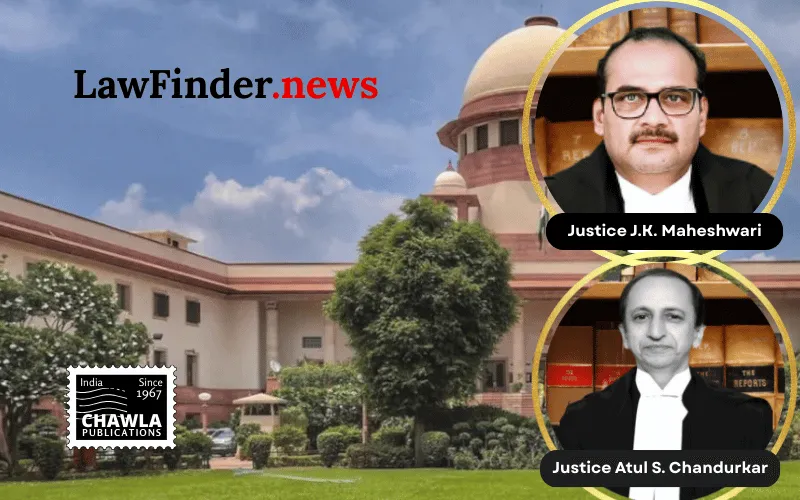
The bench, comprising Justices J.K. Maheshwari and Atul S. Chandurkar, highlighted that the termination was not a simple administrative decision but was based on uncommunicated adverse material and procedural unfairness. The judgment reiterated that any termination based on misconduct allegations requires a formal disciplinary proceeding to ensure fairness and transparency.
The Court meticulously analyzed the sequence of events, noting that Singh was initially suspended for allegedly attempting to remove confidential documents. Although the suspension was later revoked, the bank did not initiate a formal disciplinary inquiry, instead extending his probation and eventually terminating him.
Significantly, the Court pointed out the inconsistencies in the bank's justification for termination, particularly the reliance on internal memos that were not communicated to Singh. The Court observed that these memos, which criticized Singh's performance, were not substantiated and were contradicted by external commendation for his work from the government.
In its ruling, the Supreme Court upheld the orders of the Calcutta High Court, which had quashed the termination, and directed the Bank of Baroda to compensate Singh with 50% back wages and other consequential benefits. The judgment emphasizes that employers, especially state entities, must adhere to principles of natural justice and cannot bypass formal disciplinary proceedings under the guise of administrative action.
The ruling serves as a significant precedent, reinforcing the legal protections available to probationary employees and clarifying the distinction between termination simpliciter and punitive termination. It underscores the judiciary's role in ensuring procedural fairness and protecting employees from arbitrary dismissal.
Bottom Line:
Termination of a probationer's services, disguised as non-satisfactory performance but actually based on allegations of misconduct, is punitive and requires adherence to principles of natural justice and due process. Such termination cannot bypass formal disciplinary proceedings.
Statutory provision(s): Regulation 16(3)(a) of Vijaya Bank (Officers') Regulations, 1982, Article 311 of the Constitution of India
General Manager, Bank of Baroda v. Ashok Kumar Singh, (SC) : Law Finder Doc id # 2909585