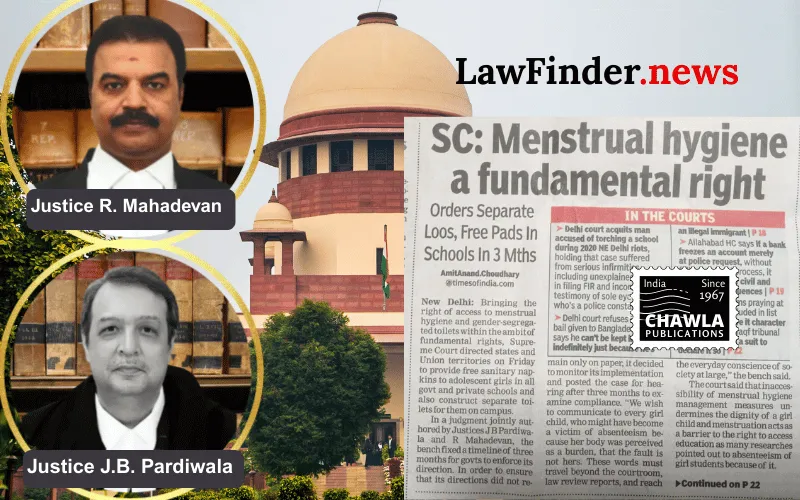
Supreme Court Mandates Free Sanitary Pads and Separate Toilets in Schools to Uphold Girls' Right to Education and Dignity Landmark Judgment Recognizes Menstrual Hygiene Management as Integral to Fundamental Rights under Articles 14, 21, and 21A of the Constitution; Directs Comprehensive Measures Across India
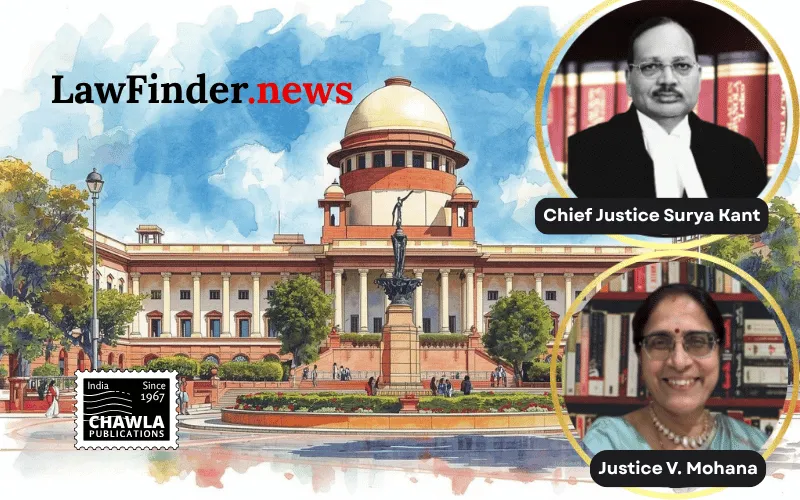
In a significant judgment dated January 30, 2026, the Supreme Court of India in the case of Dr. Jaya Thakur v. Government of India & Ors. has affirmed the critical importance of menstrual hygiene management (MHM) in ensuring the fundamental right to education for adolescent girls. The Court held that the absence of gender-segregated toilets, free access to sanitary napkins, and safe disposal mechanisms in schools violates constitutional guarantees under Articles 14 (Equality), 21 (Right to Life and Dignity), and 21A (Right to Education).
The petition, filed under Article 32 of the Constitution by social worker Dr. Jaya Thakur, sought directions to the Union and State Governments to provide free sanitary pads to all female students from classes 6 to 12, ensure separate toilets for girls in all government-aided and residential schools, maintain cleanliness, and implement awareness programs on menstrual health.
The Court extensively analyzed the issue in the context of international human rights law, domestic constitutional provisions, and relevant Supreme Court precedents. It emphasized education as a fundamental human right and a "multiplier right" essential for the realization of other rights. The Court underscored the substantive approach to equality, recognizing that mere formal equality is insufficient when structural disadvantages persist, particularly for menstruating girls and girls with disabilities.
The judgment highlighted research evidencing that lack of menstrual hygiene facilities leads to absenteeism and school dropouts among girls, thereby impeding their right to education and participation on equal footing with peers. It also recognized the right to dignified menstrual health as encompassed within the right to life under Article 21, including aspects of privacy and bodily autonomy.
Key Directions Issued by the Supreme Court:
1. Toilet and Washing Facilities: All schools, whether government-run or privately managed, must provide functional, gender-segregated toilets with water connectivity, designed to ensure privacy and accessibility for all children, including those with disabilities. Hand-washing facilities with soap and water must be available at all times.
2. Availability of Menstrual Absorbents: Schools must provide oxobiodegradable sanitary napkins free of cost to girls, preferably through vending machines located within toilet premises or designated accessible areas. Menstrual Hygiene Management (MHM) corners equipped with spare innerwear, uniforms, disposable bags, and other essentials should be established.
3. Disposal of Sanitary Waste: Schools must have safe, hygienic, and environmentally compliant disposal mechanisms for sanitary waste in line with the latest Solid Waste Management Rules. Covered waste bins in toilets must be regularly cleaned and maintained.
4. Awareness and Training: The National and State Councils of Educational Research and Training (NCERT and SCERT) are directed to include gender-responsive curricula addressing menstruation, puberty, and related health issues to break stigma. Teachers of all genders must be trained and sensitized on menstrual hygiene management. Publicity campaigns about sanitary products and child helpline services must be widely disseminated.
5. Monitoring and Compliance: District Education Officers (DEOs) shall conduct annual inspections of school infrastructure, menstrual hygiene provisions, and awareness programs, incorporating anonymous student feedback. Non-compliance will be addressed by State Commissions for Protection of Child Rights (SCPCRs) and the National Commission for Protection of Child Rights (NCPCR), which have powers to recommend corrective action.
The Court emphasized that the failure to provide adequate menstrual hygiene facilities constitutes a gender-specific barrier, undermining the right to free and compulsory education guaranteed under the Right of Children to Free and Compulsory Education Act, 2009 (RTE Act). It called for a shift from formal to substantive equality by adopting affirmative measures that address the intersecting disadvantages faced by menstruating girls, particularly those from economically weaker sections and with disabilities.
The judgment also underscored the role of men in menstruation-related education and awareness, urging sensitization of male students and teachers to foster an inclusive and stigma-free environment in schools.
The Supreme Court has issued a continuing mandamus, requiring the Union and State Governments to ensure compliance with these directions within three months from the date of judgment. The Court will review compliance reports and continue to monitor implementation to ensure that "a period should end a sentence - not a girl's education."
This historic ruling reaffirms the constitutional commitment to gender equality, dignity, and social justice, recognizing menstrual hygiene management as an essential component of the right to education and life with dignity in India.
Statutory provision(s):- Article 14, Article 21, Article 21A of the Constitution of India; Right of Children to Free and Compulsory Education Act, 2009 (RTE Act), Sections 3, 18, 19; Right of Children to Free and Compulsory Education Rules, 2010; Commissions for Protection of Child Rights Act, 2005, Sections 15 and 24
Dr. Jaya Thakur v. Government of India, (SC) : Law Finder Doc Id # 2845612