Court Advises Parties to Resolve Community Burial Ground Conflict through Civil Proceedings
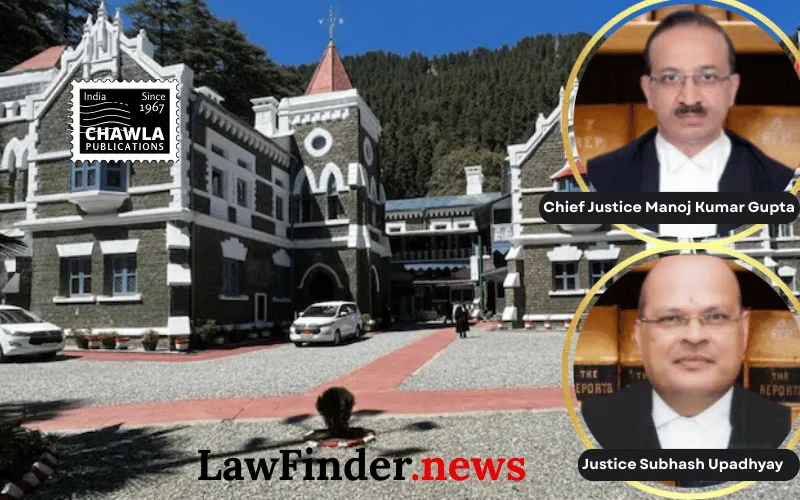
In a significant judgment, the Uttarakhand High Court has refused to entertain a Public Interest Litigation (PIL) concerning a dispute between two Muslim communities over burial rights in a Kabristan located in Village Bhaniyawala, Tehsil Doiwala, District Dehradun. The case, Mohd. Shahzad v. State of Uttarakhand, was heard by a division bench comprising Chief Justice Manoj Kumar Gupta and Justice Subhash Upadhyay, who ruled that such disputes should be resolved through appropriate civil proceedings rather than a PIL.
The petitioner, Mohd. Shahzad, representing the Barelvi community, sought judicial intervention to prevent alleged interference by the Deobandi community in the burial practices of the Barelvi members. The petitioner requested the court to issue a mandamus directing the state and respondent Nos. 8 to 16 to ensure unobstructed burial rights for the Barelvi community and to provide adequate protection for their post-death rituals.
Counsel for the petitioner, Mr. Piyush Garg, argued that the Barelvi community, being numerically stronger in the village, should have unhindered access to the burial ground. He contended that respondent Nos. 8 to 16, belonging to the Deobandi community, were unjustly restricting access.
However, the court determined that the dispute between the two communities did not fall within the ambit of Public Interest Litigation, which is meant for broader public concerns rather than specific community disputes. The bench advised the petitioner and the Barelvi community to pursue their claims through civil litigation or other legal remedies available under the law.
The judgment underscores the court's stance that PILs should not be used to resolve private or localized conflicts, particularly those involving religious communities, without exploring all possible civil avenues first. This approach aligns with the broader judicial philosophy of maintaining the sanctity and purpose of PILs, focusing them on issues that affect the public at large.
As the writ petition stands disposed of, the court has paved the way for the parties involved to seek resolution through civil courts, encouraging them to establish their rights in a manner consistent with legal procedures.
This judgment is likely to set a precedent for similar cases, reinforcing the judiciary's role in directing community-specific disputes towards appropriate legal channels rather than clogging the PIL route with cases that do not serve the public interest.
Bottom line:-
Public Interest Litigation - Dispute between two Muslim communities regarding the right of burial in a Kabristan does not fall under the ambit of Public Interest Litigation. Such disputes should be addressed through appropriate civil proceedings or other legal remedies.
Statutory provision(s): None specified in the judgment.
Mohd. Shahzad v. State of Uttarakhand, (Uttarakhand)(DB) : Law Finder Doc id # 2894532