Supreme Court Revives Writ Petition Alleging Fraud, Overrules High Court's Technical Rejections Supreme Court criticizes Telangana High Court for dismissing a fraud allegation writ petition on technical grounds, orders fresh consideration by a different bench.
In a landmark decision, the Supreme Court of India has set aside a Telangana High Court order that dismissed a writ petition alleging fraud and collusion, emphasizing that such serious allegations must be examined on their merits rather than being dismissed on technicalities. The case, titled "Sri Mukund Maheswar v. Axis Bank Ltd.," involved appellants who claimed that an advocate appointed as Commissioner acted fraudulently in taking possession of a secured asset.
The appellants had initially approached the High Court under Article 226 of the Constitution, asserting that their rights were violated due to fraudulent actions. However, the High Court dismissed the writ petition, sustaining objections raised by its Registry. These objections included issues with the prayer's formulation and the inclusion of multiple respondents.
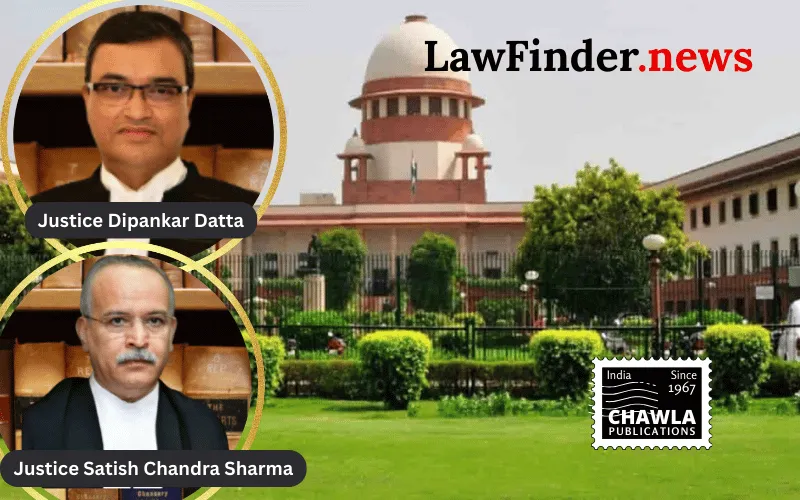
The Supreme Court, comprising Justices Dipankar Datta and Satish Chandra Sharma, criticized the High Court's approach, underscoring the legal maxim "fraus omnia corrumpit" (fraud unravels everything). The apex court stressed that allegations of fraud warrant a substantive examination and should not be dismissed on procedural or technical grounds.
The Supreme Court also addressed the Registry's objections regarding the prayer's specificity and the inclusion of multiple reliefs in a single prayer. It clarified that while reliefs should be clearly stated, the presence of multiple reliefs does not justify the rejection of a writ petition. The court highlighted the flexibility in judicial procedures, allowing for the amendment of prayers and the deletion of unnecessary parties by the court itself.
Furthermore, the Supreme Court noted that the High Court had abandoned its judicial role by not addressing the merits of the case and directed that the writ petition be revived for fresh consideration by a different Division Bench.
The Supreme Court's decision reaffirms the judiciary's commitment to ensuring that serious allegations such as fraud are thoroughly examined and not sidelined due to procedural technicalities. The writ petition will now be placed before the Chief Justice of the Telangana High Court for further proceedings, ensuring that justice is duly served.
Bottom Line:
Writ petition alleging fraud and collusion cannot be rejected on mere technicalities without an examination of its merits. High Court erred in sustaining office objections and rejecting the writ petition unjustly.
Statutory provision(s): Article 226 of the Constitution of India, Order VII Rule 7, Order VI Rule 17, Order I Rule 10 of the Civil Procedure Code, 1908
Sri Mukund Maheswar v. Axis Bank Ltd., (SC) : Law Finder Doc Id # 2843068