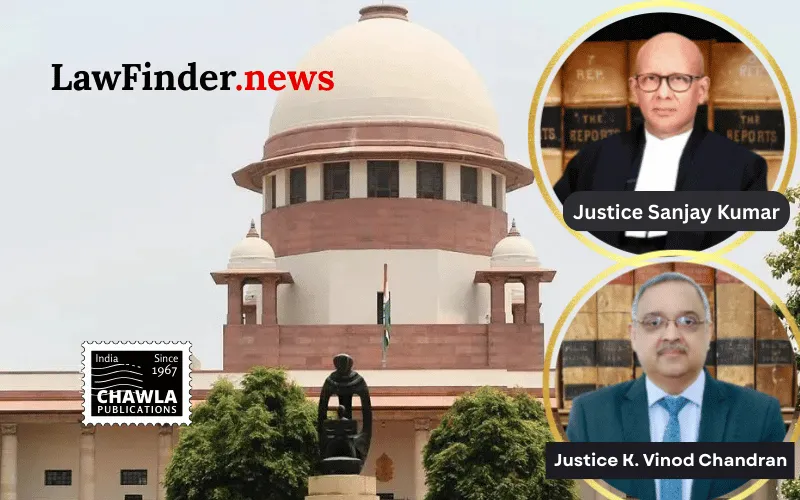
Supreme Court Acquits Husband in 26-Year-Old Dowry Death Case, Lack of Credible Evidence and Procedural Irregularities Lead to Acquittal in Long-Standing Dowry Death Allegations
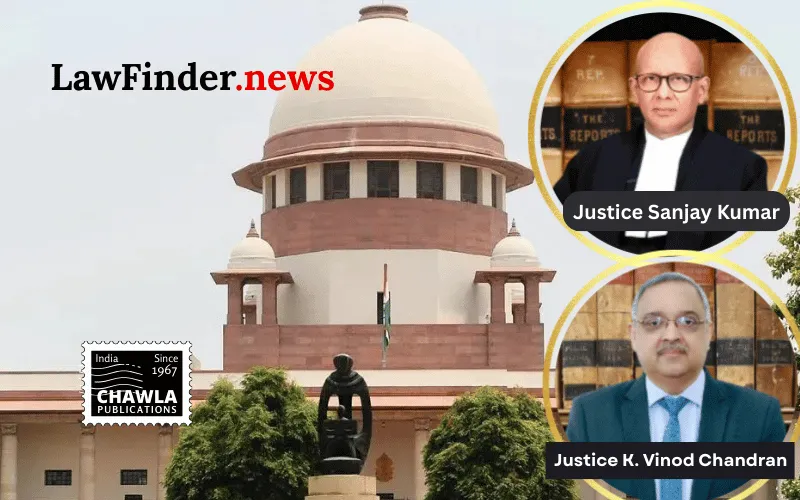
In a landmark judgment, the Supreme Court of India has acquitted Brajesh Kumar, the husband accused in a dowry death case that has been pending for over 26 years. The judgment, delivered by Justices Sanjay Kumar and K. Vinod Chandran, emphasized the importance of reasonable doubt and highlighted procedural irregularities that occurred during the investigation and trial. The case involved the tragic death of Kumar's wife due to burn injuries, originally alleged to have been caused by dowry demands and marital cruelty.
The Supreme Court's decision underscored the failure of the prosecution to establish the demands for dowry and marital discord beyond a reasonable doubt. Defense evidence portrayed a picture of a happy marriage and an accidental death scenario, challenging the prosecution's narrative. The Court criticized the trial court for neglecting defense evidence and relying solely on prosecution witnesses, reiterating the need for equal consideration of both sides to adhere to the standard of proof beyond reasonable doubt.
The judgment also addressed significant procedural lapses, including the improper cognizance taken by the trial court based on defective investigations and multiple final reports. The Supreme Court highlighted the primacy of the court in taking cognizance, rejecting the prosecution's procedural lapses as prejudicial and ordering acquittal due to miscarriage of justice.
Furthermore, the Court examined the dying declaration recorded by a Magistrate and corroborated by hospital staff. It opined that the exculpatory dying declaration raised reasonable doubt about the guilt of the accused, with defense evidence and circumstances validating the accidental nature of the burn injuries.
Justice K. Vinod Chandran, delivering the judgment, emphasized that the prosecution failed to establish constant demands for dowry, a bitter matrimony, or any other circumstance leading to a conclusion of instigated dowry death or cruelty. The absence of a postmortem and unsatisfactory explanations further weakened the prosecution's case.
The judgment not only acquits Brajesh Kumar but also serves as a reminder of the importance of diligent and unbiased investigation and prosecution in criminal cases. It calls for equal attention to defense evidence as is given to prosecution evidence, ensuring that the rights of the accused are not prejudiced by procedural errors or unsubstantiated allegations.
Bottom Line:
Dowry death allegations and procedural irregularities - Supreme Court emphasizes the importance of reasonable doubt, defense evidence, and the failure of the prosecution to prove its case beyond reasonable doubt. Acquittal granted due to lack of credible evidence and procedural lapses.
Statutory provision(s): Sections 498A, 304B, and 34 of the Indian Penal Code, 1860; Sections 3/4 of the Dowry Prohibition Act, 1961; Sections 173, 190, 156(3), and 158 of the Criminal Procedure Code, 1973; Section 465 of the CrPC; Section 218 to 223 of the CrPC, 1973; Section 537 of the CrPC, 1898.
Brajesh Kumar @ Birjesh Kumar Singh v. State of Bihar, (SC) : Law Finder Doc id # 2939808