Court Directs Petitioner to Engage in Election Commission's Special Intensive Revision Process
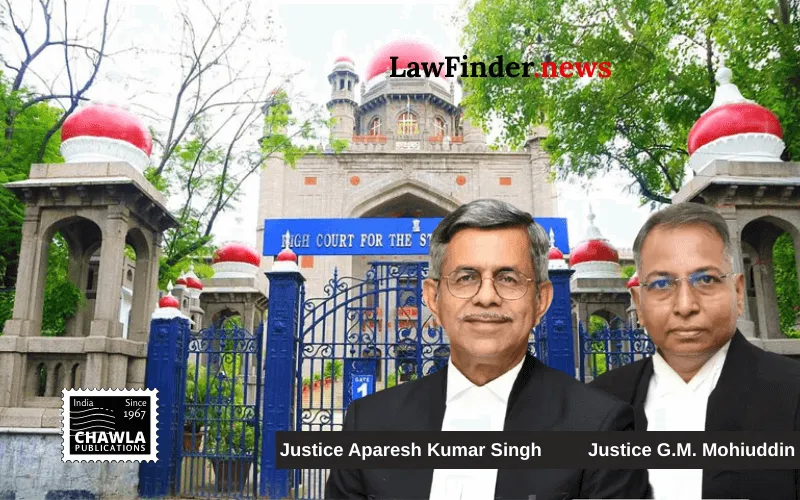
In a significant judgment delivered on June 30, 2026, the Telangana High Court has dismissed a writ petition filed by Syed Qutubuddin Masood, who sought judicial intervention for the restoration of his and his family members' names in the electoral rolls. The petitioner alleged wrongful deletion of their names and sought a directive for correction. The Division Bench, comprising Chief Justice Aparesh Kumar Singh and Justice G.M. Mohiuddin, emphasized the importance of adhering to the statutory remedies provided under the Representation of the People Act, 1950, and declined to exercise its writ jurisdiction under Article 226 of the Constitution of India.
The petitioner contended that despite multiple representations to the Electoral Registration Officer and other officials, no action was taken to address the wrongful deletion. In response, the Election Commission of India had initiated a Special Intensive Revision (SIR) process, which the court deemed an adequate remedy for the grievances raised. The SIR process, currently underway, involves comprehensive measures such as house-to-house enumeration, allowing for claims and objections, and provides an appellate mechanism, ensuring no eligible voter is excluded from the rolls.
The court noted that the petitioner approached the judiciary two years after the alleged deletion and highlighted the ongoing SIR process as a structured remedy. The court's decision underscores the judiciary's stance on refraining from intervention when statutory mechanisms are available and in motion. The petitioner was advised to participate in the SIR process, which aims to address such electoral discrepancies.
Bottom line:-
Electoral Roll - Writ Petition seeking restoration of names wrongly deleted from electoral rolls - High Court refrained from interfering, directing the petitioner to participate in the Special Intensive Revision (SIR) process initiated by the Election Commission of India for redressal of grievances.
Statutory provision(s): Representation of the People Act, 1950 Section 22, Constitution of India, 1950 Article 226