Court rules restoration of dealership illegal, citing contravention of Specific Relief Act and Supreme Court precedents
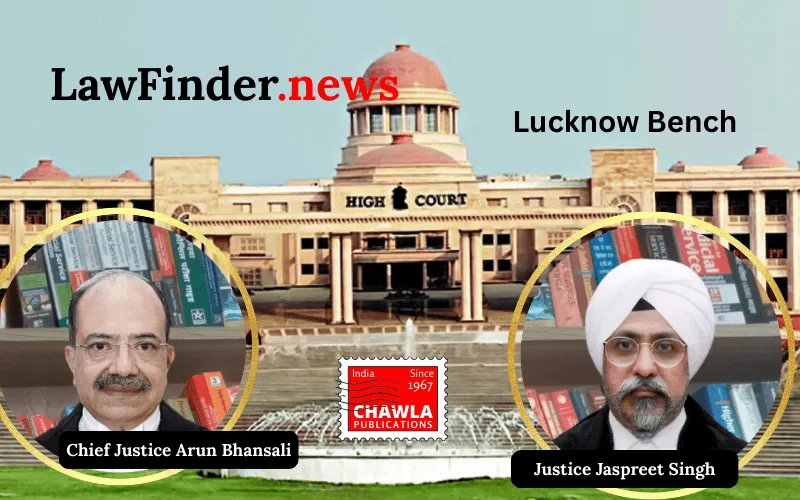
In a significant ruling, the Allahabad High Court has set aside an arbitral tribunal’s award that restored the dealership of Kumar Filling Station, which was terminated by the Indian Oil Corporation Limited (IOCL). The Division Bench, comprising Chief Justice Arun Bhansali and Justice Jaspreet Singh, delivered the judgment on May 15, 2026, emphasizing that the restoration of the dealership was patently illegal and contrary to established legal precedents.
The case stemmed from a dispute over the termination of a dealership agreement between IOCL and Kumar Filling Station, located in Unnao, Uttar Pradesh. The agreement, initially executed in 2008, was terminated by IOCL in 2019 following an investigation that alleged tampering with a pulsar card at the respondent’s retail outlet. Despite Kumar Filling Station's claim of wrongful termination, the Arbitral Tribunal initially ruled in favor of restoration.
However, the High Court found this restoration to be in violation of Section 14(1)(c) of the Specific Relief Act, 1963, which prohibits specific enforcement of contracts that are determinable in nature. The court referenced judgments from the Supreme Court, notably the cases of Amritsar Gas Service and E. Venkatakrishna, to underscore that such contracts, by their nature, do not warrant restoration upon termination.
The High Court noted that the arbitral tribunal failed to adequately address the determinable nature of the agreement in its award. The court further observed that the tribunal's decision lacked a proper basis in law, given the agreement’s clear terms allowing termination with notice.
IOCL's appeal under Section 37 of the Arbitration and Conciliation Act, 1996, challenged both the arbitral award and the subsequent order by the Commercial Court, which had upheld the tribunal’s decision. The High Court agreed with IOCL's position, stating that the findings by the tribunal and the Commercial Court were legally unsustainable.
The judgment highlights the limited scope of judicial review under Section 37 and reiterates the principle that arbitration awards must align with the substantive law of India, particularly in cases involving contracts that are inherently revocable.
The High Court’s decision reinforces the legal principle that while arbitral tribunals have the authority to adjudicate disputes, their awards must conform to statutory provisions and judicial precedents. The ruling also serves as a reminder of the judiciary's role in ensuring that arbitral decisions adhere to the fundamental legal framework governing contractual agreements.
Bottom line:-
Arbitration and Conciliation Act, 1996 - Restoration of dealership by Arbitral Tribunal despite dealership being determinable in nature under the agreement - Held, patently illegal and contrary to the provisions of the Specific Relief Act and precedents laid down by the Supreme Court of India.
Statutory provision(s): Arbitration and Conciliation Act, 1996 Sections 34, 37; Specific Relief Act, 1963 Section 14