Court rules termination of probationary judge for misconduct without proper inquiry violates constitutional protections, orders reinstatement with benefits
In a significant judgment, the Andhra Pradesh High Court has set aside the termination order of M. Manasa, a probationary Additional Junior Civil Judge, ruling that her discharge from service without a proper inquiry was unconstitutional. The court ordered her reinstatement with back wages and continuity of service.
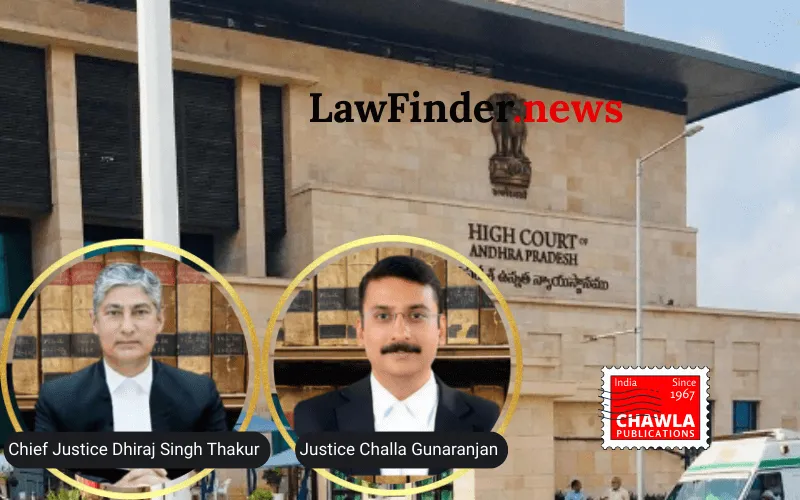
The Division Bench comprising Chief Justice Dhiraj Singh Thakur and Justice Challa Gunaranjan delivered the judgment in response to a writ petition filed by Manasa challenging her termination on grounds of alleged misconduct during her probation period. The court found that the termination was punitive and stigmatic, violating Article 311(2) of the Constitution of India, which mandates a proper inquiry before such punitive actions.
Manasa was appointed as a Junior Civil Judge and commenced her probation on October 13, 2016. During her training, she was accused of improper behavior, including sitting in an unassigned courtroom and engaging in conversations with a male colleague, which allegedly disturbed court proceedings. These incidents led to her suspension and eventual discharge by the state government.
The High Court, however, ruled that the termination was not a simple end to probation but was based on allegations of misconduct without a regular inquiry, making it punitive in nature. The court emphasized that the decision to discharge her was based solely on these allegations and not on an evaluation of her overall performance, which included favorable annual confidential reports.
The court's decision highlights the importance of due process and the protection of constitutional rights, even for probationary employees. The judges noted that the termination order was founded on misconduct allegations, making it necessary to conduct an inquiry as per Article 311(2) before such a decision could be taken.
In its ruling, the court directed the government to reinstate Manasa with all consequential benefits, including back wages, emphasizing that reinstatement is the normal rule when a termination is deemed wrongful and illegal.
This judgment underscores the judiciary's role in safeguarding constitutional guarantees and ensuring that procedural due process is followed in employment terminations, particularly within the judicial services.
Bottom Line:
Termination of a probationer's service on grounds of misconduct without proper inquiry is punitive, stigmatic, and violative of Article 311(2) of the Constitution of India. Such termination cannot be treated as simpliciter and warrants reinstatement with consequential benefits.
Statutory provision(s): Article 311(2) of the Constitution of India, Andhra Pradesh State Judicial Service Rules, 2007 (Rule 11), Articles 14, 16, and 21 of the Constitution of India.
M. Manasa v. State of Andhra Pradesh, (Andhra Pradesh)(DB) : Law Finder Doc id # 2887115