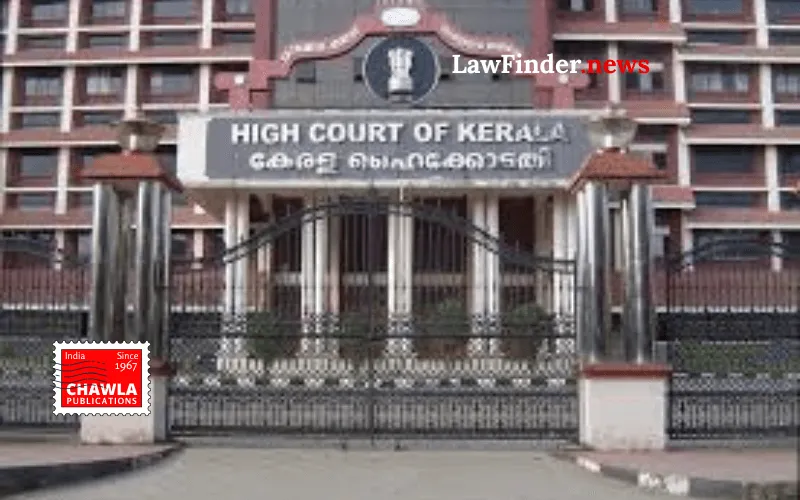
Court Confirms Invalidity of Auction Sale Without Borrower's Consent at Reserve Price
In a significant ruling, the Andhra Pradesh High Court has affirmed that the consent of the borrower is mandatory for confirming the sale of a secured asset at the reserve price under the Securitisation and Reconstruction of Financial Assets and Enforcement of Security Interest Act (SARFAESI Act), 2002. The Division Bench, comprising Justices Cheekati Manavendranath Roy and Venuthurumalli Gopala Krishna Rao, delivered the judgment on May 1, 2026, in the case of Dukkala Lakshmana Rao v. Sudulangunta Rama Rao.
The court was addressing two writ petitions filed by Union Bank of India (formerly Andhra Bank) and the auction purchaser, challenging the orders of the Debts Recovery Appellate Tribunal at Kolkata. The tribunal had upheld the decision of the Debts Recovery Tribunal, Visakhapatnam, which set aside the sale of a secured asset due to the absence of the borrower's consent.
The case revolved around a public auction of a school building owned by M/s. Best Sai Enterprises, which had defaulted on a loan from Union Bank of India. The auction, held on April 12, 2023, resulted in the property being sold at the reserve price of Rs. 3.48 crore. However, the sale was confirmed without obtaining the borrower's consent, leading to legal challenges.
The court meticulously analyzed Rule 9(2) of the Security Interest (Enforcement) Rules, 2002, which requires the borrower's consent for confirming a sale at the reserve price if the authorized officer fails to obtain a higher bid. The judgment highlighted the legislative intent behind this provision, emphasizing fairness in the recovery process and protecting the borrower's interests.
The Andhra Pradesh High Court's decision aligns with the views of the Madras and Delhi High Courts, which have previously ruled that the borrower's consent is essential for confirming a sale at the reserve price. The court disagreed with contrary interpretations by the Kolkata and Kerala High Courts, which suggested that consent was not mandatory.
The ruling underscores the statutory force of the SARFAESI Act and its rules, affirming that compliance with these provisions is crucial. The court dismissed the writ petitions, upholding the orders of the Debts Recovery Tribunal and the Appellate Tribunal, thereby invalidating the auction sale.
This judgment reinforces the importance of following due process in asset recovery under the SARFAESI Act and serves as a reminder of the borrower's rights in such proceedings.
Bottom line:-
SARFAESI Act - Consent of the borrower is mandatory to confirm the sale of a secured asset at the reserve price if the authorized officer fails to obtain a price higher than the reserve price in the public auction.
Statutory provision(s): Securitisation and Reconstruction of Financial Assets and Enforcement of Security Interest Act, 2002, Rule 9(2) of the Security Interest (Enforcement) Rules, 2002.
Dukkala Lakshmana Rao v. Sudulangunta Rama Rao, (Andhra Pradesh)(DB) : Law Finder Doc id # 2902578