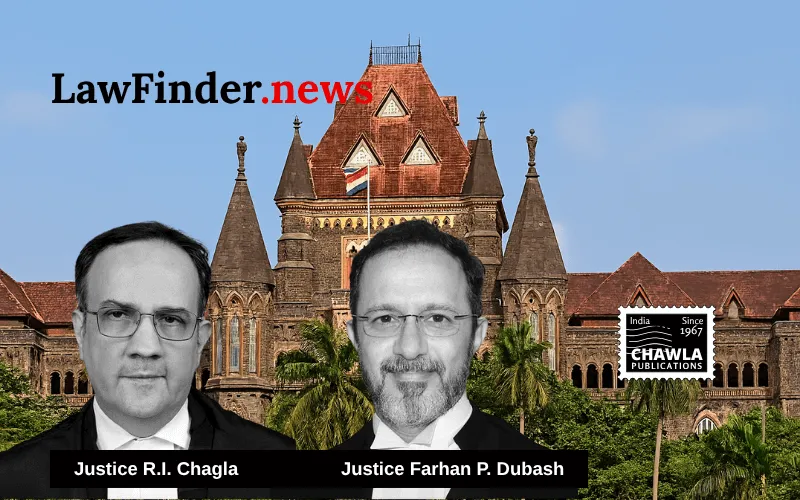
Court Upholds University's Decision to Debar Student Due to Insufficient Attendance Despite Medical Claims
In a significant ruling, the Bombay High Court dismissed a writ petition filed by a student, Kavya Agarwal, seeking relief from debarment by the University Grants Commission due to inadequate attendance during her final semester. The court, exercising its discretion under Article 226 of the Constitution of India, maintained that the academic regulations regarding attendance were neither arbitrary nor unconstitutional and should be uniformly applied to all students.
The petitioner, Kavya Agarwal, a B.Sc. (Applied Psychology) student at Narsee Monjee Institute of Management Studies (NMIMS), was debarred from sitting for her Semester VI examinations scheduled between April 24 and May 5, 2026, as she failed to meet the minimum attendance requirement of 80%. Despite her commendable academic record in previous semesters, her attendance fell below the required threshold due to a psychiatric condition diagnosed in January 2026, which led to a significant medical episode in March.
Represented by Mr. Abhishek Salian, Agarwal contended that her medical condition and subsequent hospitalization warranted a relaxation of the attendance requirements. However, the court, presided by Justices R.I. Chagla and Farhan P. Dubash, emphasized the lack of contemporaneous evidence supporting the claim that her medical condition was communicated to or acknowledged by the university in a timely manner.
The university, represented by Mr. Girish Godbole, argued that the attendance policy was clear and known to all students, requiring at least 80% attendance, and that exceptions could not be made without substantial evidence. The court agreed with this stance, noting the absence of any correspondence from the petitioner’s parents to the university explaining the decision to keep her away from classes post-discharge from the hospital.
The judgment further highlighted that judicial review in academic matters should be exercised with restraint, especially when it involves disputed facts requiring detailed inquiry. The court noted that such matters are best left to academic institutions unless there is clear evidence of arbitrariness or statutory violations, neither of which was present in this case.
Despite acknowledging the petitioner’s medical difficulties, the court concluded that the relief sought could not be granted based on the records and evidence provided. The ruling reaffirms the principle that academic regulations must be applied uniformly, and judicial intervention is limited to instances of clear legal or factual missteps.
Bottom Line:
Article 226 of the Constitution of India - Writ jurisdiction cannot be exercised to rewrite academic regulations or create exemptions unless a clear legal or factual basis is established.
Statutory provision(s): Article 226 of the Constitution of India
Kavya Agarwal v. University Grants Commission, (Bombay)(DB) : Law Finder Doc id # 2927009