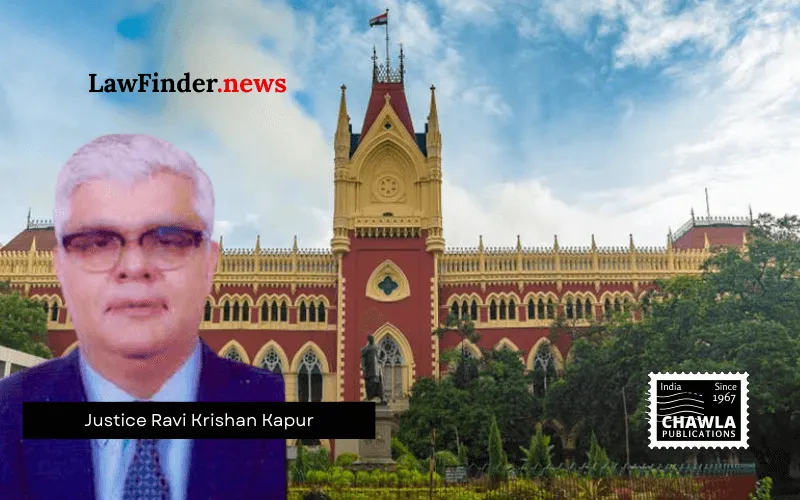
The court ruled that ChatGPT, developed by OpenAI, is not an intermediary under the Information Technology Act, 2000, and denied interim relief to Indiamart
In a significant judgment, the Calcutta High Court dismissed the petition filed by Indiamart Inter Mesh Limited against OpenAI Inc., the developers of ChatGPT. The court, presided over by Justice Ravi Krishan Kapur, ruled on May 20, 2026, that ChatGPT should be classified as an "originator" under the Information Technology Act, 2000, rather than an "intermediary." This classification significantly impacts the legal obligations and liabilities applicable to ChatGPT under the current IT Act framework.
The case revolved around Indiamart's claim that ChatGPT was deliberately excluding their platform from search results, thereby causing economic loss and infringing on their intellectual property rights. Indiamart argued that this exclusion violated sections of the IT Act and their fundamental rights under the Indian Constitution.
However, the court found that there is no legal or constitutional right for a business entity to demand visibility or specific representation on a private platform like ChatGPT. It further stated that such demands would amount to dictating the operational terms of a private enterprise, which is against the principles of free-market governance.
The court also addressed the intermediary versus originator debate, noting that generative AI platforms like ChatGPT require legislative reconsideration for their classification and liability. It highlighted that ChatGPT's dynamic content generation capabilities position it more as an originator, as it creates new content rather than merely hosting or transmitting third-party content.
The judgment also touched upon the trade marks aspect, noting that ChatGPT's referential use of Indiamart's trademark does not constitute dilution or infringement under the Trade Marks Act, 1999. The court emphasized that there was no falsity, deception, or confusion caused by the platform's responses.
Indiamart's plea for interim relief was also rejected, as the court found no prima facie case was established. The court noted that granting such relief would disrupt the operations of OpenAI and would be akin to granting final relief prematurely. The court suggested that legislative intervention is necessary to address the unique challenges posed by generative AI platforms like ChatGPT.
Bottom line:-
Intellectual Property Rights and Intermediary Obligations - A private business entity like ChatGPT cannot be compelled to operate on terms dictated by another party, as there is no legal right to visibility or promotion on another platform. The generative AI platform "ChatGPT" is prima facie classified as an "originator" under the Information Technology Act, 2000, rather than an "intermediary" due to its dynamic content generation capabilities.
Statutory provision(s):
- Information Technology Act, 2000: Sections 2(1)(w), 2(1)(za), 79
- Trade Marks Act, 1999: Section 29(4)
The case highlights the complex legal challenges and questions around the regulation of AI platforms, the rights of businesses in the digital space, and the evolving nature of intellectual property laws in the face of technological advancements.
Indiamart Inter Mesh Limited v. Open AI Inc., (Calcutta) : Law Finder Doc id # 2902597