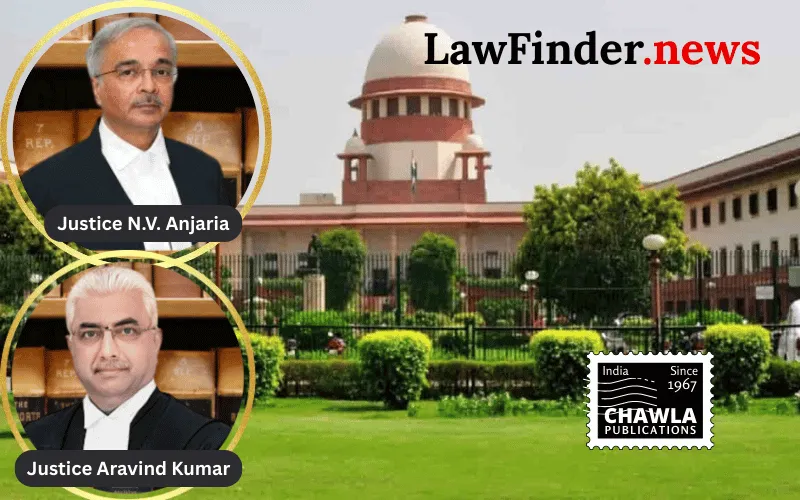
Supreme Court Acquits Narendra Singh; Upholds Acquittal of All Accused in Dowry Death Case, Supreme Court Overturns Conviction under Section 498A IPC, Citing Insufficient Evidence and Contradictory Testimonies
In a landmark judgment, the Supreme Court of India has acquitted Narendra Singh, the father-in-law of a deceased woman, of charges under Section 498A of the Indian Penal Code (IPC), citing insufficient evidence and contradictory testimonies. The court also upheld the acquittal of all three accused, including the husband and mother-in-law, under Sections 302 and 304B IPC, reinforcing the principle of benefit of doubt in criminal trials.
The case originated from a tragic incident involving the death of a young woman within nine months of her marriage, allegedly due to dowry demands and cruelty by her in-laws. The trial court had initially convicted the in-laws under Section 302 IPC for murder and Section 498A IPC for cruelty. However, the High Court set aside the murder conviction, citing contradictory dying declarations, while maintaining the conviction under Section 498A IPC.
Narendra Singh appealed against his conviction, arguing that the allegations were generic and unsupported by credible evidence. The Supreme Court, after examining the case, found significant contradictions in the testimonies of the prosecution's key witnesses, who were the family members of the deceased. The court noted that these testimonies lacked corroboration from independent witnesses and were inconsistent with earlier statements made to the police.
Further, the court scrutinized the two dying declarations made by the deceased, one alleging murder and the other suggesting suicide. The Supreme Court deemed the second declaration more credible, highlighting evidence of tutoring during the first. Citing the well-established principle that a dying declaration can be pivotal but must be free from suspicion, the court found the evidence insufficient to uphold the convictions.
The judgment also emphasized the need for caution in cases involving allegations of dowry demands, noting that such claims must be substantiated beyond reasonable doubt. The court reiterated the legal standard that in criminal trials, if two inferences are possible, the one favoring the accused must be adopted. Consequently, the court acquitted Narendra Singh and dismissed the appeals challenging the acquittal of the other accused.
This ruling underscores the judiciary's commitment to ensuring convictions are based on robust and reliable evidence, while also safeguarding against potential misuse of legal provisions intended to protect women from domestic violence and dowry harassment.
Bottom Line:
Conviction under Section 498A IPC requires clear and credible evidence of cruelty or dowry demands. Contradictory dying declarations and inconsistent testimonies weaken the prosecution's case. Benefit of doubt must go to the accused when evidence is insufficient or unreliable.
Statutory provision(s): Section 498A IPC, Section 302 IPC, Section 304B IPC, Section 113B Evidence Act, Section 161 CrPC
Narendra Singh v. State of Madhya Pradesh, (SC) : Law Finder Doc id # 2891219