Supreme Court Quashes Criminal Proceedings Against Doctor Accused of Unauthorized Surgery, Supreme Court rules in favor of Dr. S. Balagopal, citing lack of evidence for negligence or consent forgery
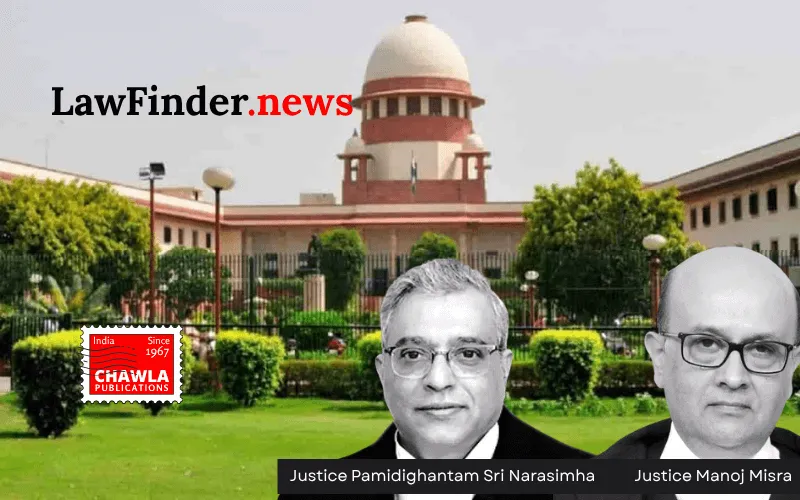
In a significant judgment, the Supreme Court of India has quashed the criminal proceedings against Dr. S. Balagopal, who was accused of performing an unauthorized Orchidectomy on a minor patient. The case, which had been ongoing since 2006, was brought to the Supreme Court after the High Court of Judicature at Madras rejected a petition to quash the proceedings. The Supreme Court bench, comprising Justices Pamidighantam Sri Narasimha and Manoj Misra, ruled that the continuation of the proceedings would constitute an abuse of judicial process.
The case originated from a complaint by the father of a one-and-a-half-year-old boy, who alleged that Dr. Balagopal performed an Orchidectomy-removal of the testicle - without proper consent, and that the consent form had been altered to include the procedure. The complaint led to an FIR and subsequent charge-sheeting of Dr. Balagopal under multiple sections of the Indian Penal Code, including those related to forgery and negligence.
A Medical Board constituted following a High Court order found that the procedure performed was medically appropriate, as the child had an un-descended testicle, which posed a risk of malignancy. The Medical Board and the Director of Medical and Rural Health Services both opined that there was no evidence of forgery or malpractice in obtaining consent for the surgery.
In its judgment, the Supreme Court emphasized that criminal liability should only be invoked against medical professionals when there is clear evidence of gross negligence or malice. The court noted that the consent form, although in a general printed format, mentioned both Orchidopexy and Orchidectomy as potential procedures, and there was no forensic evidence of interpolation.
The Supreme Court's decision underscores the high threshold required to prosecute medical professionals, reaffirming that slight procedural lapses in obtaining consent do not necessarily render a medically appropriate procedure illegal. The ruling is expected to have significant implications for the medical community, particularly in reinforcing the legal standards for consent and criminal liability.
Bottom Line:
Criminal liability of a doctor cannot arise when the medical procedure is appropriate, consent was obtained, and there is no evidence of malice or negligence.
Statutory provision(s): Section 482 of the Criminal Procedure Code, 1973, Sections 336, 465, 471 of the Indian Penal Code, 1860
Dr. S. Balagopal v. State of Tamil Nadu, (SC) : Law Finder Doc id # 2878645