Court Finds No "Sufficient Cause" in Advocate's Delay Explanation; Emphasizes Diligence and Timeliness in Legal Proceedings
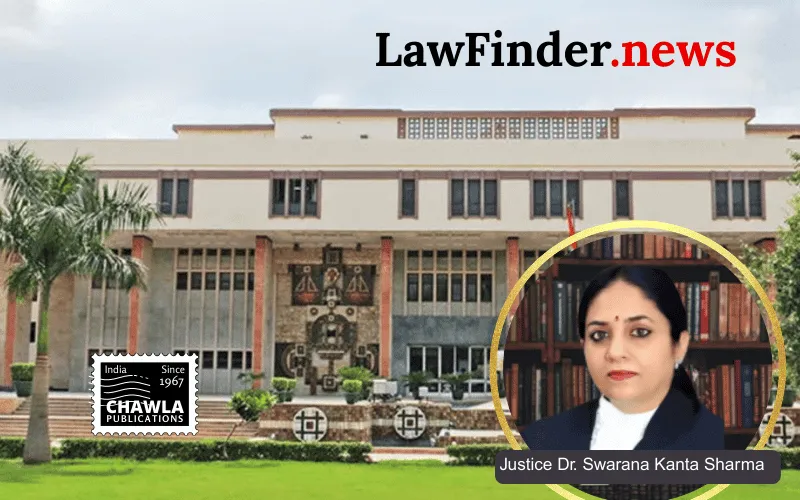
The Delhi High Court, presided over by Justice Dr. Swarana Kanta Sharma, has dismissed a petition filed by Ajit Kumar Gola seeking condonation of a 412-day delay in challenging an order under Section 482 of the Criminal Procedure Code (Cr.P.C.). The judgment, delivered on April 4, 2026, underscores the necessity for litigants to demonstrate diligence and promptitude when pursuing legal remedies, even in the absence of a prescribed limitation period.
The case involved Ajit Kumar Gola, a practising advocate, who sought to challenge an order dated January 19, 2023, passed by the Additional Sessions Judge, North, Rohini Courts, Delhi. The Sessions Court had remanded a matter back to the Trial Court for re-appreciation of pre-summoning evidence. Gola contended that the delay was neither intentional nor deliberate, attributing it to his need for extensive legal research and difficulties in understanding the implications of the order.
However, the Court found Gola's explanations unconvincing, stating that being a practising advocate did not exempt him from the requirement of timely legal action. The Court highlighted that legal research or misunderstanding of judicial orders cannot justify such an extended delay. Justice Sharma emphasized that condonation of delay is not an entitlement but a discretionary relief that requires a "sufficient cause" covering the entire period of delay.
The judgment referenced several precedents where courts have held that even in the absence of a specific limitation period, petitions must be filed within a reasonable time. The Court cited the Supreme Court's observations in Mool Chandra v. Union of India and State of Odisha v. Managing Committee of Namatara Girls High School, which articulate the need for a cogent explanation for delays in legal filings.
The Delhi High Court further noted that a 90-day period is generally considered reasonable for filing such petitions. The Court ruled that Gola failed to provide any satisfactory explanation for his delay, which spanned over a year. The ruling serves as a reminder of the importance of adhering to procedural timelines to prevent the abuse of process and ensure justice is served efficiently.
Bottom Line:
Condonation of delay in filing a petition under Section 482 Cr.P.C. cannot be claimed as a matter of right. The petitioner must demonstrate "sufficient cause" covering the entire period of delay. Delay attributed to legal research or misunderstanding of the judicial order by a practising advocate is not sufficient justification for condonation.
Statutory provision(s):
Section 482 of the Criminal Procedure Code, 1973
Ajit Kumar Gola v. State (GNCTD), (Delhi) : Law Finder Doc id # 2878055