Court Restores Order of Discharge, Emphasizing Lack of Primary Evidence and Misapplication of Departmental Proceedings
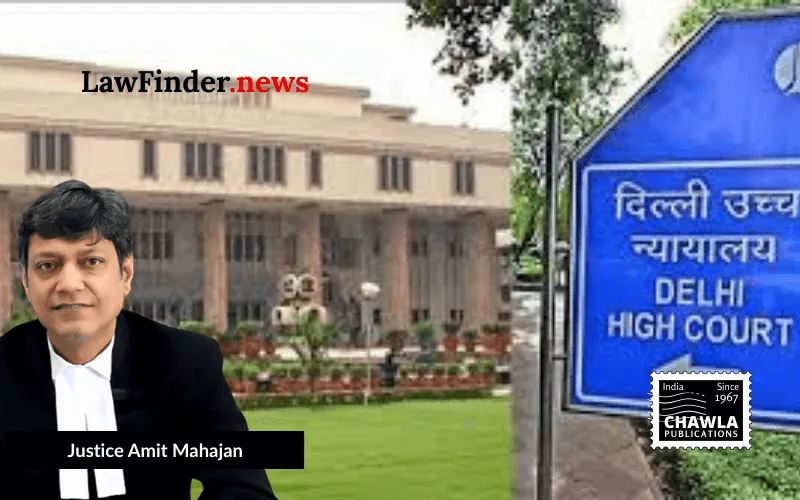
In a significant ruling, the Delhi High Court has set aside the order of the Additional Sessions Judge that directed the framing of charges against Narender Singh, a process server, for allegedly fabricating false evidence related to a divorce summons. Justice Amit Mahajan, presiding over the matter, restored the discharge order initially passed by the Metropolitan Magistrate, citing the absence of primary evidence and the misapplication of findings from departmental proceedings.
The case originated from a complaint by Indu Malhotra, who alleged that her husband, Pankaj Malhotra, obtained an ex-parte divorce decree from a Jaipur court without her knowledge. A supplementary charge-sheet accused Singh of fabricating a service report to show that summons had been served upon Malhotra, allegedly facilitating the ex-parte decree.
Key to the High Court's decision was the absence of the original summons, which was claimed to have been manipulated. Justice Mahajan emphasized that without this primary evidence, the allegations could not be substantiated. The judgment underscored that departmental proceedings, which had imposed a penalty on Singh, could not replace the requirement of material evidence in criminal prosecution.
The court also noted that the complainant had admitted her signatures on the summons, weakening the prosecution's stance that she never received them. Further, the acquittal of the main accused, Pankaj Malhotra, in related charges of sexual assault and deceitful marriage lent credence to the argument that the service report was not fabricated.
The judgment reiterated the distinct thresholds for summoning, framing of charges, and discharge under the Criminal Procedure Code, cautioning against undue reliance on departmental findings for criminal charges. In conclusion, the court found that continuing the trial in the absence of substantive evidence would constitute an abuse of judicial process.
Bottom Line:
Revisional powers of the High Court in the context of setting aside an order framing charges - Court cannot interfere unless the order is perverse, manifestly illegal, or based on no material.
Statutory provision(s): Section 192, Section 193, Section 376, Section 493 of the Indian Penal Code; Sections 227, 228, 195, 397, 401, 482 of the Criminal Procedure Code, 1973.
Narender Singh v. State, (Delhi) : Law Finder Doc id # 2842769