Court affirms compensation for delays attributed to Ministry of Health & Family Welfare, rejects challenge to detailed arbitral award on construction claims including tax reimbursements, escalation, and milestone payments.
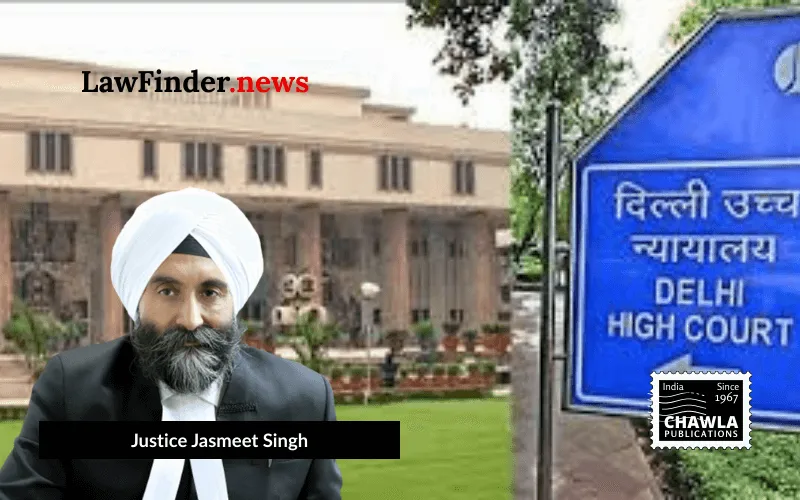
In a significant decision impacting construction contract disputes, the Delhi High Court dismissed a petition filed by the Ministry of Health & Family Welfare challenging the arbitral award in favor of Nagarjuna Construction Ltd. (now NCC Limited) concerning the medical college and hostel complex construction at AIIMS, Bhopal. The judgment dated April 9, 2026, delivered by Justice Jasmeet Singh, upheld the detailed arbitration award dated May 8, 2017, affirming the validity of compensation claims and rejecting the government's counterclaims.
The contract, valued at approximately Rs. 147.89 crore, envisaged a 15-month completion period but experienced substantial delays. The Arbitration Tribunal's award recognized that these delays were primarily attributable to the employer—the Ministry of Health & Family Welfare—based on contemporaneous and signed hindrance registers maintained at the construction site. The court emphasized the evidentiary value of such registers, noting that the petitioner failed to dispute these records before the Arbitrator or at the initial stages of court proceedings, raising objections only belatedly.
A core contention by the petitioner was that the contractual clauses barred any compensation for delays, allowing only extension of time. However, the Arbitration Tribunal, endorsed by the Court, reconciled these contractual terms with the Indian Contract Act, 1872, particularly Sections 53, 54, 55, and 73, which permit compensation when delays are solely attributable to one party. The Tribunal awarded Rs. 3.22 crores towards claims for additional expenses due to contract prolongation, including machinery hire, manpower costs, and overheads.
The Court also upheld the award for release of withheld payments related to milestone achievements. The Arbitrator held that milestones must be rescheduled upon granting extensions of time, and withholding amounts based on original milestones without rescheduling was improper. Thus, an amount of Rs. 2.95 crores was ordered refunded with interest.
On tax and labor cost reimbursements, the Arbitrator allowed claims for increased statutory levies and minimum wages despite the petitioner’s argument on procedural lapses such as delayed notices. The Court noted that such procedural requirements were directory, not mandatory, and cited precedents where similar claims were allowed despite notice defaults.
Regarding extra and substituted items like marble chips in grit plaster and ready-mix concrete (RMC), the Arbitrator found the claims valid based on detailed rate analyses, invoices, and site evidence, dismissing the petitioner’s objections as reiterations of arguments already considered.
The award further included payments for revised rates on quantities exceeding contractual deviation limits, compensation for locked performance bank guarantees due to contract prolongation, and escalation on material costs following prolonged contract execution. The Court affirmed the arbitrator’s reasoned approach in quantifying these claims, rejecting the petitioner’s pleas for reappraisal of evidence.
Importantly, the Court upheld the Arbitrator’s power to award interest on delayed payments and pendente lite interest under Section 31(7) of the Arbitration and Conciliation Act, 1996, noting no express contractual bar against such awards.
The Ministry’s counterclaims, including establishment costs and alternate accommodation expenses, were dismissed due to lack of supporting evidence and the finding that delays were attributable to the Ministry itself.
In conclusion, the Delhi High Court underscored the limited scope of judicial interference under Section 34 of the Arbitration Act, emphasizing that an award based on a plausible and reasoned view supported by evidence cannot be disturbed. The petition was dismissed, reinforcing the finality and efficacy of arbitral awards in construction contract disputes.
Bottom line:-
Arbitrator's award on construction contract claims upheld - Delays attributed to employer based on hindrance register - Compensation allowed despite contractual bar, as per Contract Act - Procedural lapses in claims treated as directory; interest awarded under Arbitration Act powers.
Statutory provision(s):
Arbitration and Conciliation Act, 1996 Section 34, Section 31(7); Indian Contract Act, 1872 Sections 53, 54, 55, 73; Minimum Wages Act, 1948; Contract Labour (Regulation and Abolition) Act, 1970
This news report summarizes the comprehensive decision by the Delhi High Court that reinforces key principles in construction arbitration, particularly the evidentiary importance of hindrance registers, the applicability of Indian Contract Act provisions overriding contractual bars on compensation in certain cases, and the procedural flexibility in claims related to taxes, labor, and extra items. The judgment also affirms the broad discretionary power of arbitrators to award interest, thereby providing clarity and predictability for government contracts and contractors alike.