Supreme Court Quashes Conviction in Cheque Dishonour Case Due to Business Failure, In a landmark judgment, the Supreme Court overturns a conviction under the Negotiable Instruments Act, considering the unprofitability and collapse of the appellant's business.
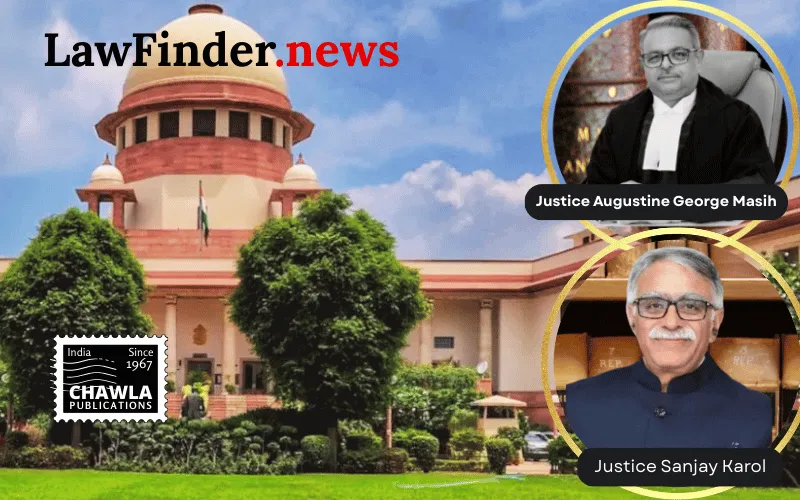
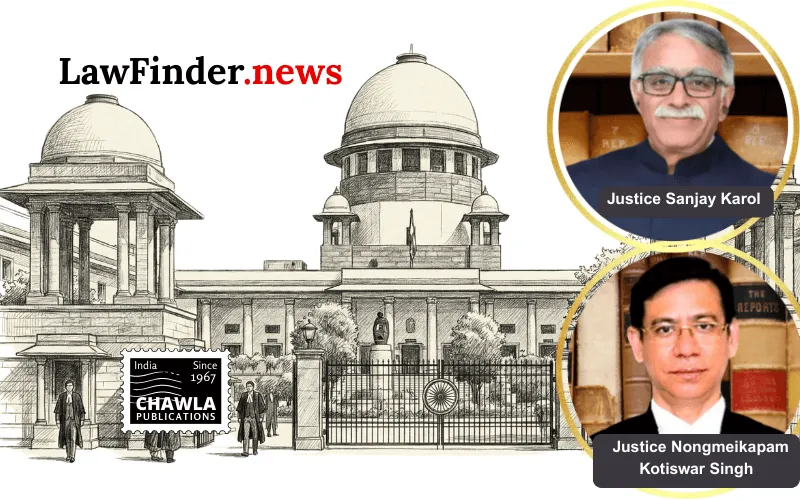
In a significant decision, the Supreme Court of India has set aside the conviction of Asha L. @ Asha Chethan Kumar, the appellant-accused, in a cheque dishonour case under the Negotiable Instruments Act, 1881. The judgment was delivered by a bench comprising Justices Sanjay Karol and Nongmeikapam Kotiswar Singh on June 4, 2026.
The case involved the dishonour of two cheques amounting to Rs. 19 lakhs issued as part of the consideration for purchasing a salon business named 'Purple Tree.' The appellant had entered into an agreement to buy this ongoing business from the respondent, Komala S.P., initially for Rs. 68 lakhs, later reduced to Rs. 56 lakhs, of which Rs. 27 lakhs had already been paid. However, when the cheques were presented for encashment, they were dishonoured due to the stoppage of payment.
The trial court initially convicted the appellant and ordered the payment of Rs. 21,50,000/-. This decision was overturned by the First Appellate Court, only to be reinstated by the Karnataka High Court, leading to the present appeal in the Supreme Court.
The Supreme Court, in its detailed analysis, considered several critical aspects leading to the appellant's financial difficulties, including the ultimate failure of the business. Despite efforts to mediate the dispute, including proceedings at the Supreme Court Mediation Centre, the parties could not reach a resolution.
A noteworthy element of the judgment is the recognition of the appellant’s financial struggles, which were compounded by the unprofitability of the business. The salon's operations, taken over by the appellant, did not yield profits, rendering the recovery of the cheque amount unattainable. Moreover, the landlord of the salon premises had reclaimed possession due to unpaid rent, further complicating the appellant's financial situation.
Acknowledging these peculiar circumstances, the Supreme Court deemed the conviction and the sentence imposed by the trial court a "fruitless exercise," highlighting that the amount sought was not a debt due, as claimed by the appellant in response to the legal notice. Consequently, the Supreme Court allowed the appeal and quashed the conviction, with all pending applications disposed of.
This judgment underscores the judiciary's ability to consider the broader context and unique facts surrounding financial transactions, especially in cases involving the Negotiable Instruments Act. By taking into account the appellant's dire financial straits and the collapse of the business, the Supreme Court has set a precedent for similar cases where the accused's inability to fulfill financial obligations is due to unforeseen business failures.
Bottom Line:
Dishonour of cheques issued as part of an agreement to purchase a business concern - Conviction set aside on account of peculiar facts, including financial difficulties of the accused and the ultimate failure of the business.
Statutory provision(s): Negotiable Instruments Act, 1881 Sections 138, 139
Asha L. @ Asha Chethan Kumar v. Komala S.P., (SC) : Law Finder Doc id # 2919088