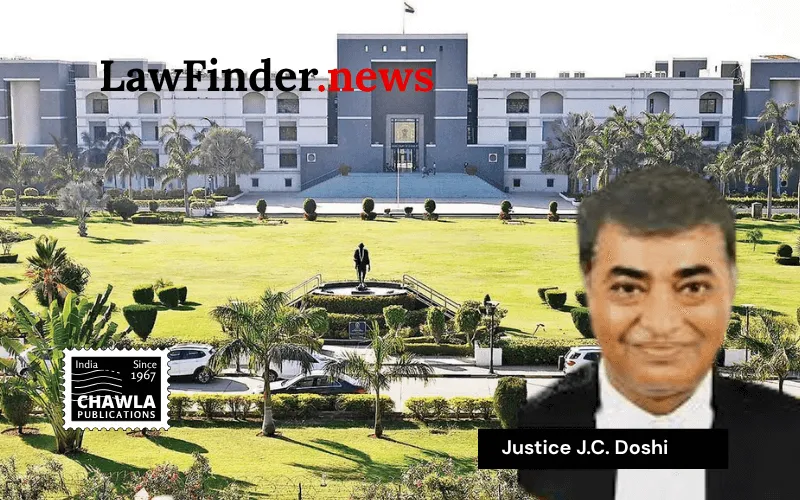
Court affirms Rs. 3 lakh compensation to victims' families, emphasizes absolute liability of electricity supplier.
In a significant ruling, the Gujarat High Court has upheld the principle of strict and absolute liability in the tragic electrocution case involving the Gujarat Electricity Board (GEB). The case, stemming from an incident on October 30, 1988, led to the deaths of two brothers, Nitin and Rajendra Sitaram, who were electrocuted while repairing a television antenna on their building's terrace in Surat.
The court emphasized that electricity is a hazardous substance and the supplier bears an absolute liability to ensure safety by maintaining proper distances and implementing safety measures, regardless of the timeline of nearby constructions. The High Court, presided over by Justice J.C. Doshi, rejected the GEB's defense that the high-tension electric line had been installed before the building's construction and that the accident was due to the negligence of the victims.
In the original suit, filed by the heirs of the deceased Rajendra Sitaram, the court had awarded a compensation of Rs. 3 lakh, which the GEB contested. The GEB argued that the trial court's decision contradicted a previous ruling in a related suit that attributed negligence to the deceased. However, Justice Doshi highlighted that the principle of res judicata does not permit contradictory findings in related suits arising from the same incident.
The judgment drew upon precedents, including the landmark case of M.C. Mehta v. Union of India, to reinforce the concept of absolute liability. The court further referenced the Supreme Court's stance in H.S.E.B. v. Ram Nath, asserting that electricity suppliers must ensure safety even if unauthorized constructions exist near their installations.
The court dismissed the appeal, directing the trial court to disburse the compensation amount with accrued interest to the claimants. This ruling underscores the judiciary's commitment to holding electricity suppliers accountable for safety, particularly in cases involving hazardous substances like electricity.
Bottom Line:
Principles of strict and absolute liability apply to cases of electrocution caused by high-tension electric wires, even if the electric lines predate nearby construction, and the electricity supplier is obligated to ensure safety measures to prevent accidents.
Statutory provision(s):
- Indian Electricity Act
- Code of Civil Procedure, 1908
This judgment serves as a reminder of the critical responsibility of utility providers to prioritize public safety and adhere to legal obligations, regardless of changes in infrastructure or urban development.
GEB v. Nirmal Rajendra Mandela, (Gujarat) : Law Finder Doc id # 2885784