Court dismisses claims of illegal arrest, citing compliance with statutory and constitutional safeguards.
In a significant ruling, the Kerala High Court has upheld the arrest of Pankaj Bhandari, a key accused in the high-profile Sabarimala gold misappropriation case. The court dismissed the writ petition filed by Bhandari challenging his arrest as illegal, unconstitutional, and violative of his fundamental rights under Articles 21 and 22 of the Constitution of India.
The case revolves around allegations of a criminal conspiracy to misappropriate gold cladded on the Dwarapalaka plates and other items from the Sabarimala temple. Bhandari, along with other accused, was alleged to have stripped the gold from these items at his Chennai-based workshop, Smart Creations, causing significant pecuniary loss to the Travancore Devaswom Board.
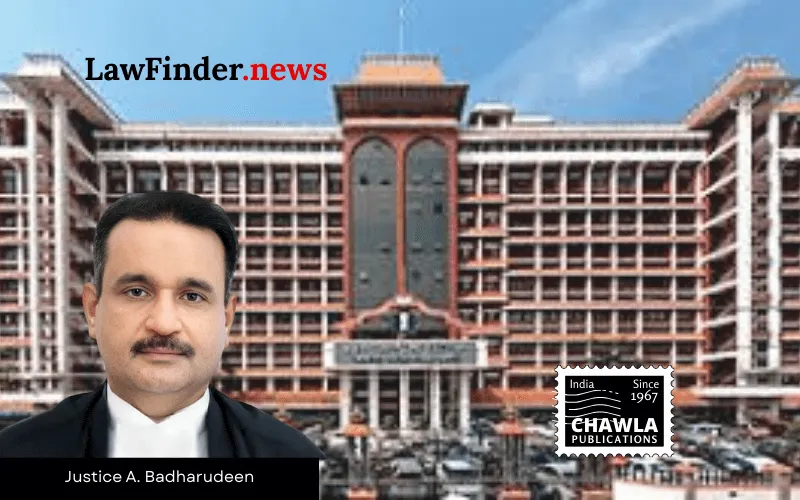
Presided over by Justice A. Badharudeen, the court meticulously examined whether the statutory and constitutional safeguards in arrest proceedings were adhered to. The court emphasized the importance of communicating the grounds of arrest in writing, not just to the arrestee but also to their friends or relatives, to ensure timely legal assistance.
The court noted that the grounds of arrest, as detailed in Exts.P13 and P15, were communicated to Bhandari and a person accompanying him, thereby fulfilling the statutory mandate under the Bharatiya Nagarik Suraksha Sanhita, 2023. Despite procedural anomalies such as the late production of Bhandari before the court, the court held that these were not sufficient to declare the arrest illegal.
The judgment also highlighted the distinction between "reasons for arrest" and "grounds of arrest," reiterating that the latter must contain specific allegations against the accused to enable them to defend themselves effectively. The court found that the notices served on Bhandari contained detailed allegations, thereby complying with constitutional requirements.
Furthermore, the court addressed the issue of legal representation, noting that although the counsel of Bhandari's choice was informed, the delay in production did not vitiate the arrest. The court concluded that the procedural compliance upheld the legality of the arrest, dismissing Bhandari's petition.
This ruling underscores the judiciary's commitment to ensuring procedural compliance in arrest proceedings while balancing the rights of the accused and the interests of justice.
Bottom Line:
Compliance with constitutional and statutory safeguards in arrest proceedings, including communication of grounds of arrest, legal representation during remand proceedings, and the distinction between "reasons for arrest" and "grounds of arrest."
Statutory provision(s): Bharatiya Nagarik Suraksha Sanhita, 2023 Sections 47, 48, 35(1)(b)(ii), Code of Criminal Procedure, 1973 Section 50A, Constitution of India, 1950 Articles 21, 22.
Pankaj Bhandari v. State Of Kerala, (Kerala) : Law Finder Doc id # 2852793