Supreme Court Overturns NGT Orders, Paves Way for Indian Oil's Petrol Pump Setup The Supreme Court criticizes the National Green Tribunal for delegating adjudicatory functions to committees, violating principles of natural justice.
In a significant judgment, the Supreme Court of India has set aside the National Green Tribunal's (NGT) orders that had stalled the establishment of a petrol pump by Indian Oil Corporation Ltd. for over six years. The apex court found that the NGT had improperly delegated its adjudicatory responsibilities to a committee, thereby violating its statutory mandate under the National Green Tribunal Act, 2010.
The case, titled "Indian Oil Corporation Ltd. v. Deepak Sharma & Ors.", revolved around a dispute regarding the siting of a petrol pump, which was alleged to contravene guidelines set by the Central Pollution Control Board (CPCB). The NGT had initially imposed restrictions based on these guidelines, citing environmental concerns due to the proximity of a gas agency and a play school.
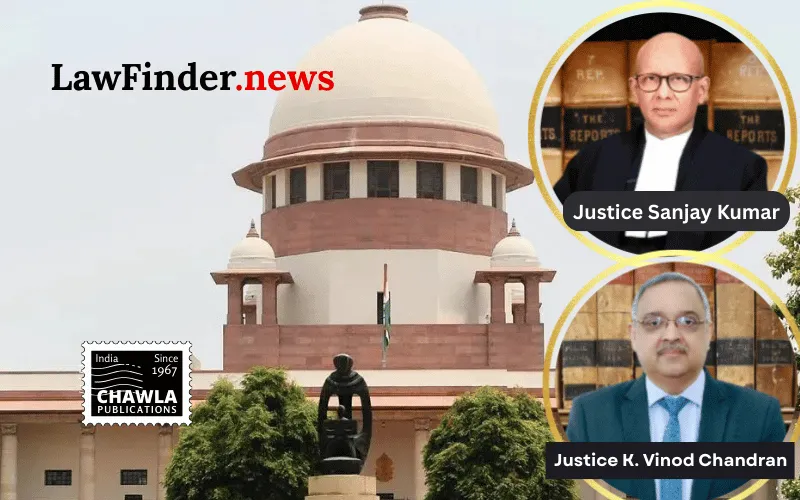
However, the Supreme Court, led by Justices Sanjay Kumar and K. Vinod Chandran, found that the NGT had abdicated its jurisdiction by allowing a committee to make the final decision on the matter. This delegation was contrary to the statutory requirements that mandate the NGT to adjudicate based on principles of natural justice.
The apex court highlighted that the NGT's orders, dated February 1, 2021, and November 11, 2022, were passed without proper consideration of the parties involved and without adhering to the principles of natural justice. The Supreme Court emphasized that the NGT must render the final decision itself, rather than relying solely on the findings of a committee, even if it is an expert committee.
Furthermore, the Supreme Court pointed out that the reports from the committees indicated no violation of the CPCB guidelines regarding the siting criteria for petrol pumps. It was found that the area in question was designated as commercial according to the Haridwar Master Plan 2025, and there were no high-tension lines passing over the proposed site.
The judgment also touched upon the issue of locus standi, questioning the bona fides of the petitioner, Deepak Sharma, and implying that the petition might have been motivated by ulterior motives rather than genuine environmental concerns.
As a result of the Supreme Court's decision, the District Magistrate of Haridwar has been directed to reconsider the issue, ensuring compliance with current statutory requirements. If all legal conditions are met, the establishment of the petrol pump will proceed.
This judgment underscores the Supreme Court's stance on maintaining the integrity of adjudicatory processes and ensuring that statutory bodies like the NGT adhere to their roles without overstepping their jurisdiction by delegating critical decisions.
Bottom Line:
National Green Tribunal (NGT) - Adjudicatory authority cannot abdicate its jurisdiction by delegating decision-making to committees. NGT is bound to adjudicate disputes based on principles of natural justice, as per its statutory mandate under the NGT Act.
Statutory provision(s):
National Green Tribunal Act, 2010 (Sections 14, 15, 19), Central Pollution Control Board Guidelines, Petroleum Rules, 2002.
Indian Oil Corporation Ltd. v. Deepak Sharma, (SC) : Law Finder Doc id # 2870700