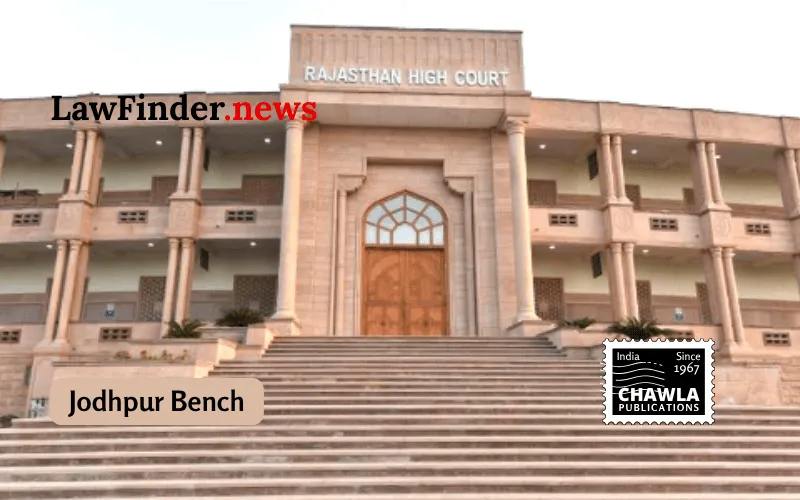
Jodhpur, Apr 13 In a significant ruling on the scope of reservations in postgraduate medical admissions, the Rajasthan High Court has affirmed that candidates belonging to other states cannot claim reserved category seats in Rajasthan.
The decision came on a petition moved by the Federation of Private Medical and Dental Colleges of Rajasthan challenging a February 18, 2026, resolution of the NEET-PG counselling board.
The petitioner had sought directions to allow non-domicile SC, ST and OBC candidates to avail reservation benefits, including reduced percentile, and participate in counselling against reserved seats in Rajasthan.
Dismissing the plea, Justice Sanjeet Purohit said that the constitutional scheme clearly envisages identification of reserved categories on a state-wise basis, rooted in local socio-economic conditions.
Extending such benefits across state boundaries would run contrary to this framework, it said, ruling that the state's policy aligns with the constitutional framework governing reservations and does not create any illegality or discrimination.
The petitioner argued that the purpose of lowering NEET-PG qualifying percentiles -- aimed at filling a large number of vacant seats -- was frustrated by excluding out-of-State reserved category candidates from availing the benefit.
It was also contended that the decision amounted to indirectly enforcing a complete domicile-based reservation and altered the rules midway through the counselling process.
On the other hand, the state defended its position, asserting that reservation policies are inherently state-specific and applicable only to candidates recognised under Rajasthan's notified categories.
It submitted that non-domicile candidates were not barred from participation altogether but were rightly considered under the unreserved category, in line with the counselling guidelines.
The High Court rejected the contention of 100 per cent domicile reservation, saying the policy merely restricts reservation benefits to eligible state candidates while allowing others to compete in the general pool.
It also ruled that candidates cannot seek admission to unreserved seats by relying on relaxed qualifying standards meant for reserved categories.
The court underscored that although filling vacant postgraduate seats is important, it cannot override statutory norms or compromise merit standards, particularly in specialised medical education.
Finding no merit in the challenge, the Court upheld the counselling board's decision and dismissed the writ petition, along with all pending applications.