Supreme Court Upholds Bye-Laws of Rajasthan Co-operative Societies, Dismisses High Court's Verdict, SC affirms statutory autonomy of co-operative societies, rules byelaws regulating election eligibility are valid.
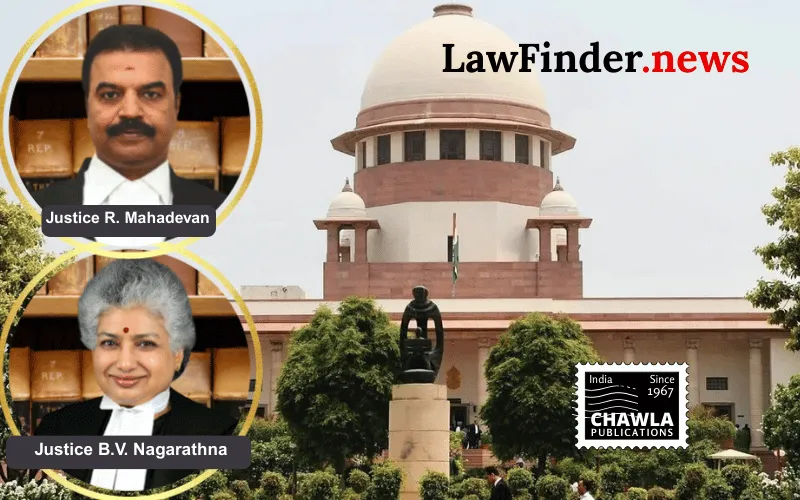
In a significant ruling, the Supreme Court of India has overturned a decision by the Rajasthan High Court, thereby upholding the validity of certain bye-laws framed by various District Milk Producers' Co-operative Unions in Rajasthan. The Supreme Court bench, comprising Justices B.V. Nagarathna and R. Mahadevan, delivered the judgment in favor of the appellants, Ram Chandra Choudhary and others, who were not parties to the original writ proceedings but were directly affected by the High Court's decision.
The case revolved around the challenge to the bye-laws that prescribed eligibility conditions for contesting elections to the management committees of the District Milk Unions. The High Court had earlier declared these bye-laws as ultra vires the Rajasthan Co-operative Societies Act, 2001, a decision which was contested by the appellants on grounds of procedural and substantive flaws.
The Supreme Court underscored the distinction between 'eligibility' and 'disqualification', affirming that the impugned bye-laws merely regulate eligibility criteria without imposing disqualifications, thus falling within the statutory framework of the Act, 2001. The bye-laws in question were designed to ensure that only active and functional members of the co-operative societies could participate in the governance of the District Milk Unions, aligning with the objectives of promoting efficiency and accountability within the co-operative movement.
The apex court also highlighted the procedural lapses in the High Court's judgment, particularly the non-joinder of necessary parties and the bypassing of the statutory dispute resolution mechanism provided under the Act, 2001. The Supreme Court reiterated that the writ jurisdiction under Article 226 of the Constitution should not have been invoked without exhausting the statutory remedies available under the Act.
In a detailed exposition, the Supreme Court clarified that co-operative societies are not 'State' within the meaning of Article 12 of the Constitution and are thus not amenable to writ jurisdiction in matters pertaining to their internal management and electoral processes. The Court further emphasized that the statutory framework provided under the Act, 2001, offers a comprehensive mechanism for resolving disputes related to the elections and management of co-operative societies.
This ruling is expected to have far-reaching implications for the governance of co-operative societies across the country, reinforcing their statutory autonomy and the validity of their bye-laws regulating internal affairs.
Bottom Line:
Co-operative Societies under the Rajasthan Co-operative Societies Act, 2001 are not "State" under Article 12 of the Constitution. The right to contest elections in co-operative societies is a statutory right and not a fundamental right. Bye-laws prescribing eligibility criteria for contesting elections do not amount to disqualifications under the Act and are within the statutory framework of the Act, 2001.
Statutory provision(s):
Constitution of India Article 12, Article 19(1)(c), Article 226; Rajasthan Co-operative Societies Act, 2001 Sections 8, 32, 58, 60, 100, 104, 105, 106, 107, 125; Schedule B Clauses 1(da), (i), (r), (v); Supreme Court judgments referenced: Ajay Hasia v. Khalid Mujib Sehravardi, Federal Bank Ltd. v. Sagar Thomas, Thalappalam Service Co-operative Bank Ltd. v. State of Kerala.