Supreme Court Rules Personal Law Governs Succession of Former Royals' Private Properties, In a landmark judgment, the Supreme Court declared that the rule of primogeniture does not apply to private properties of erstwhile rulers post-merger, emphasizing personal law for succession.
In a significant ruling, the Supreme Court of India has clarified the legal framework governing the succession of private properties belonging to erstwhile princely states. The court ruled that such properties, post-merger into the Indian Union, are subject to personal law (Hindu or Muslim law), rather than the rule of primogeniture traditionally associated with succession to the throne.
The judgment arose from a legal battle involving the royal family of Kapurthala, with competing claims over the family's extensive properties. The appellants, led by Tikka Shatrujit Singh, contested the application of primogeniture, which allowed the eldest male heir to inherit all properties, arguing instead for partition according to Hindu Succession laws.
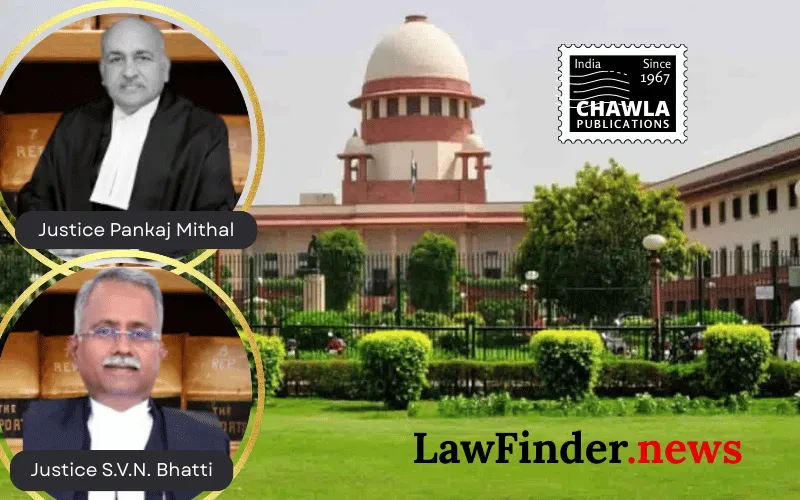
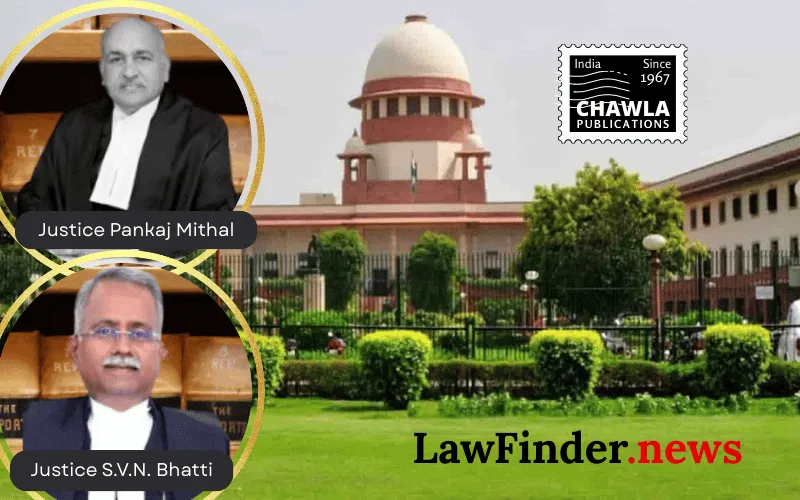
The court, comprising Justices Pankaj Mithal and S.V.N. Bhatti, examined the historical context of princely states, noting that the rule of primogeniture traditionally applied to the throne and public properties. However, following the merger agreements with the Indian Union, a distinction was made between state and private properties. The latter, declared by rulers as personal properties during the merger, are now to be governed by personal law.
The court referenced past precedents, including cases from Travancore, Rampur, and Faridkot, which reinforced that private properties of rulers must follow personal law for succession. This decision aligns with judicial precedents that distinguish between succession to the throne and private properties.
The court's analysis involved examining the merger covenant of the Kapurthala State, where the ruler retained full ownership of declared private properties, distinct from state assets. The court emphasized that the covenant did not extend the rule of primogeniture to these private properties, thereby making them subject to personal law, specifically the Hindu Succession Act, 1956.
In the Kapurthala case, the court directed that properties jointly acquired or held in joint names, and those declared as private, are liable to partition among the heirs. The decision paves the way for a more equitable distribution of erstwhile royal properties among descendants, aligning with contemporary legal standards.
This ruling not only impacts the Kapurthala royal family but also sets a precedent for other similar disputes involving former princely states, providing clarity on the legal standing of private properties versus state properties post-merger.
Bottom Line:
Succession of private properties of erstwhile rulers is governed by personal law (Hindu or Muslim law) and not by the rule of primogeniture, post-merger of princely states into the Union of India.
Statutory provision(s): Hindu Succession Act, 1956 Sections 5, 6, and 8
Tikka Shatrujit Singh v. Sukjit Singh, (SC) : Law Finder Doc id # 2907482