Supreme Court declares decree inexecutable due to non-compliance with stipulated conditions, emphasizing the discretionary nature of specific performance relief.
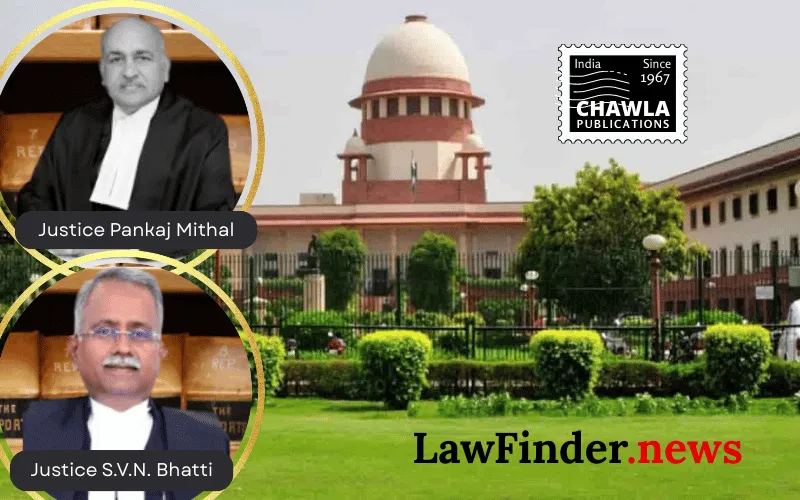
In a pivotal ruling, the Supreme Court of India in the case of "Habban Shah v. Sheruddin" addressed the executability of a specific performance decree under the Specific Relief Act, 1963. The Court, comprising Justices Pankaj Mithal and S.V.N. Bhatti, examined whether a decree directing the execution of a sale deed was inexecutable due to the non-deposit of the balance sale consideration within the specified time frame.
The case revolved around an agreement between Habban Shah, the appellant, and Sheruddin, the respondent, concerning the sale of agricultural land in Haryana. The initial decree, passed on October 31, 2012, mandated the execution of a sale deed conditioned upon the deposit of the balance sale consideration within three months. However, the respondent failed to comply within the stipulated period, leading to a series of legal proceedings.
The Supreme Court underscored that specific performance is a discretionary and equitable relief, not mandatory. It emphasized the importance of continuous readiness and willingness to fulfill contractual obligations by the decree holder. The Court reiterated that reciprocal obligations in a decree must be honored within the stipulated time to avoid rescission of the contract.
In the judgment, the Court clarified that the executability of such decrees hinges on the fulfillment of conditions, failure of which renders the decree inexecutable. The Court rejected the notion that subsequent deposit of the balance amount automatically extends the time or condones the delay. It further held that the absence of an application under Section 28 of the Specific Relief Act for rescinding the contract does not preclude the Court from treating the contract as rescinded due to non-compliance.
Moreover, the Court addressed objections regarding the limitation for execution applications, affirming that a second execution application filed within the twelve-year limitation period is maintainable, even if a previous application was dismissed for default.
The ruling highlights the Court's role in balancing equities, ensuring justice in granting or denying specific performance, and maintaining the integrity of contractual obligations. This judgment serves as a critical reminder of the procedural and equitable dimensions inherent in specific performance cases under Indian law.
Statutory provision(s): Specific Relief Act, 1963 Sections 16(c), 20, 28; Civil Procedure Code, 1908 - Order XX Rule 12A; Limitation Act, 1963 - Article 136
Habban Shah v. Sheruddin, (SC) : Law Finder Doc id # 2893873