Supreme Court Upholds Void Arbitration Award in Octroi Dispute SC Dismisses Special Leave Petition in Bharat Udyog Ltd. v. Ambernath Municipal Council, Declares Arbitration Proceedings Non-est
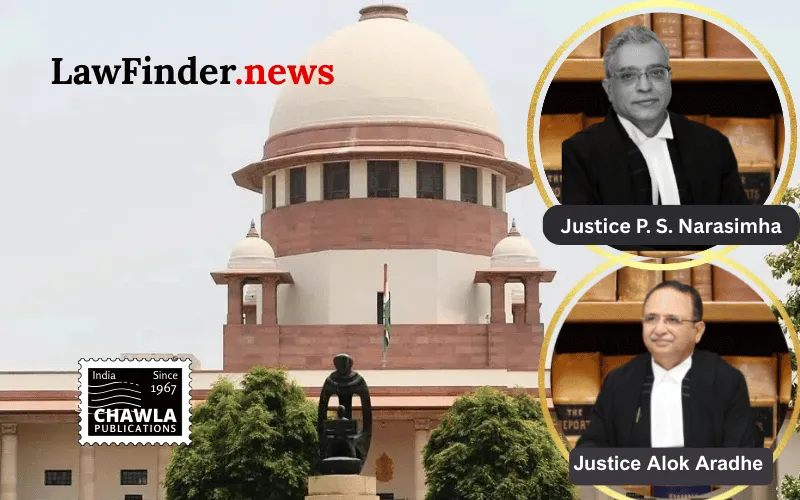
The Supreme Court of India has upheld the Bombay High Court's decision to quash an arbitration award in the long-standing octroi dispute between M/s Bharat Udyog Ltd. and Ambernath Municipal Council. The judgment, delivered by Justices Pamidighantam Sri Narasimha and Alok Aradhe, dismissed the special leave petition filed by Bharat Udyog Ltd., affirming that there was no valid arbitration agreement between the parties. The apex court declared the arbitration proceedings void and non-est due to the absence of mutual consent and inherent jurisdiction.
The dispute originated from a tender issued by the Ambernath Municipal Council for octroi collection, which Bharat Udyog Ltd. won with a bid exceeding the minimum reserve price. However, subsequent disagreements arose over the reserve price, prompting the petitioner to seek arbitration. The State Government appointed an arbitrator under Section 143-A(3) of the Maharashtra Municipal Councils, Nagar Panchayats and Industrial Townships Act, 1965, a decision now deemed outside its jurisdiction.
The Municipal Council challenged the arbitration award in the Civil Court and the Bombay High Court, arguing the absence of a valid arbitration agreement. The High Court ruled in favor of the Municipal Council, noting that the contract clause provided for a departmental mechanism rather than arbitration. The Supreme Court upheld this interpretation, emphasizing that participation in the proceedings did not confer jurisdiction and rejecting arguments of estoppel.
Legal experts have hailed the Supreme Court's decision as reinforcing the importance of mutual consent in arbitration agreements. The ruling underscores the limitations on governmental interference in contractual disputes, particularly where statutory bodies are involved.
The judgment clarifies that the arbitration award, delivered under rushed and improper proceedings, cannot stand without a foundational arbitration agreement. It also delineates the boundaries of the State Government's powers under the relevant municipal legislation.
As the parties bear their own costs, the Supreme Court's decision is expected to have significant implications for future arbitration practices involving municipal contracts, ensuring adherence to established legal principles and statutory frameworks.
Bottom Line:
Absence of a valid arbitration agreement between parties - State Government lacked jurisdiction to appoint an arbitrator under Section 143-A(3) of the Maharashtra Municipal Councils, Nagar Panchayats and Industrial Townships Act, 1965 - Arbitrator's award declared void due to lack of mutual consent and inherent jurisdiction.
Statutory provision(s): Arbitration Act, 1940 Section 2(a), Section 4, Section 30, Section 33; Maharashtra Municipal Councils, Nagar Panchayats and Industrial Townships Act, 1965 Section 143-A
M/s Bharat Udyog Ltd. v. Ambernath Municipal Council, (SC) : Law Finder Doc id # 2871161