Court rules against recognizing traditional rights without legal backing, dismisses petition citing lack of lawful authority.
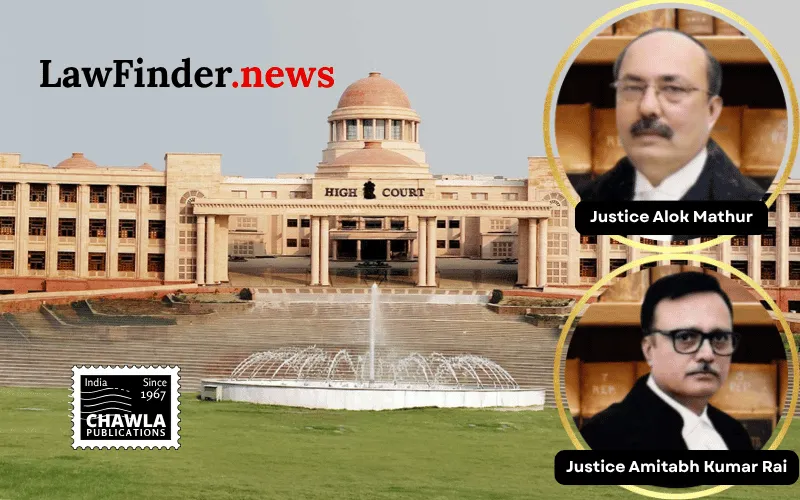
In a significant judgment, the Allahabad High Court has dismissed a petition filed by Rekha Devi, a member of the transgender community, seeking legal protection for the customary practice of collecting "badhai" – a form of traditional offering – within a defined territorial jurisdiction in Gonda, Uttar Pradesh. The decision, delivered by a division bench comprising Justices Alok Mathur and Amitabh Kumar Rai, emphasized that such customary rights lack legal recognition and cannot be protected under the Constitution of India.
Rekha Devi, along with other members of the transgender community, claimed traditional rights to collect "badhai" in certain areas, leading to disputes and violence due to overlapping jurisdictions. The petitioner invoked fundamental rights under Articles 14, 19, and 21 of the Constitution, seeking demarcation of territories to avoid conflicts. However, the court clarified that without legal backing, such practices could not be legitimized, highlighting that extraction of money must be in accordance with the law.
The judgment referenced the Transgender Persons (Protection of Rights) Act, 2019, noting that it does not recognize such customary rights. The court also mentioned the Bharatiya Nyaya Sanhita, 2023, under which illegal extraction or extortion of money is considered an offense.
The court's decision underscores the necessity for legal provisions to support the claims of customary rights, particularly for marginalized communities. The judgment also alluded to a forthcoming bill in Parliament which may address gender determination issues but currently does not legitimize the collection of "badhai."
The writ petition was ultimately dismissed, with the court asserting that recognizing such practices without statutory support could lead to broader issues of illegal extortion. The ruling serves as a reminder of the limitations of customary practices in the absence of explicit legal sanction.
Bottom Line:
Fundamental rights under Article 14, 19, and 21 of the Constitution of India cannot be invoked to legitimize the extraction of money or enforcement of customary rights like the collection of "badhai" by individuals or groups without legal backing.
Statutory provision(s): Articles 14, 19, and 21 of the Constitution of India, Transgender Persons (Protection of Rights) Act, 2019, Bharatiya Nyaya Sanhita, 2023.
Rekha Devi v. State of U.P., (Allahabad)(DB)(Lucknow) : Law Finder Doc id # 2889717