The Court affirms life imprisonment sentence for murder, emphasizing credibility of single witness amidst alleged investigative lapses.
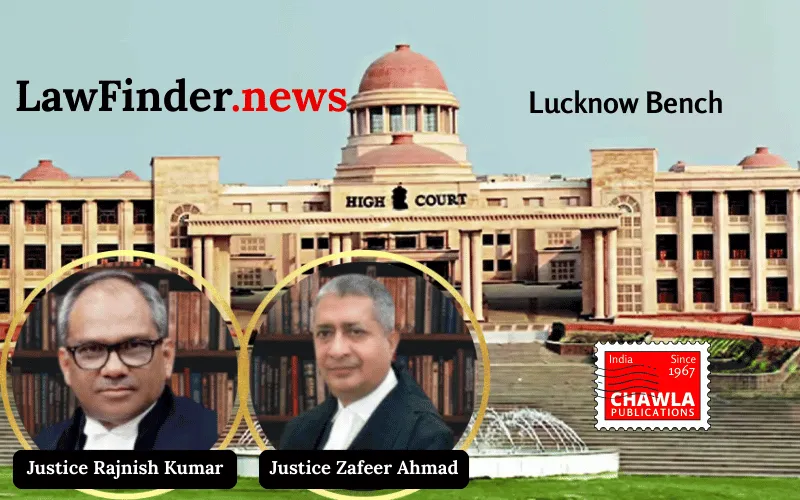
In a significant judgment, the Allahabad High Court has upheld the conviction of Rakesh and Santosh under Sections 302/34 and 201/34 of the Indian Penal Code, confirming their life imprisonment sentence. The judgment was delivered by Justices Rajnish Kumar and Zafeer Ahmad, dismissing the appeals against the IIIrd Additional Sessions Judge, Unnao's decision from 1986. The appellants had challenged the conviction, arguing it was based solely on the testimony of PW-1 Brij Kishore, the son of the deceased, which they claimed was unreliable due to his familial relationship.
The High Court, however, emphasized that the law does not necessitate a particular number of witnesses for proving a fact, as stipulated in Section 134 of the Indian Evidence Act, 1872. The Court underscored that a conviction can be sustained on the testimony of a single reliable eyewitness, provided it passes the test of reliability and inspires confidence. PW-1 Brij Kishore's testimony was found consistent and trustworthy, despite being the sole eyewitness, thereby supporting the conviction.
The appellants also pointed to alleged discrepancies between the ocular and medical evidence, non-recovery of the murder weapon, and investigative lapses, arguing these should vitiate the prosecution's case. However, the Court held that non-recovery of the weapon does not automatically invalidate the case if there is reliable ocular testimony. Minor inconsistencies in medical evidence were deemed insufficient to outweigh the direct and reliable eyewitness account provided by PW-1.
Moreover, the Court addressed the concerns regarding the testimony of a related witness, affirming that such evidence is not inherently tainted merely due to the relationship. The Court highlighted that the evidence must be scrutinized for reliability, cogency, and consistency, which PW-1's testimony met satisfactorily.
The judgment also tackled the issue of defective investigation, clarifying that unless lapses in investigation create serious doubt about the prosecution's version, they do not warrant acquittal. The Court asserted that substantive evidence, if credible, prevails over procedural defects in investigation.
In conclusion, the Allahabad High Court found no merit in the appeal, affirming the trial court's conviction and sentence. The appellants have been directed to surrender within 15 days to serve their sentence, reinforcing the judiciary's stance on the sufficiency of single eyewitness testimony in upholding convictions.
Bottom Line:
Conviction can be based on the testimony of a single reliable eyewitness, provided it passes the test of reliability and inspires confidence.
Statutory provision(s): Indian Evidence Act, 1872 Section 134, Indian Penal Code Sections 302, 34, 201, Code of Criminal Procedure Section 313
Suresh v. State of U.P., (Allahabad)(DB)(Lucknow) : Law Finder Doc id # 2868110