Court Cites Lack of Independent Witnesses and Absence of Public View in Incident Under Scheduled Castes and Scheduled Tribes (Prevention of Atrocities) Act, 1989
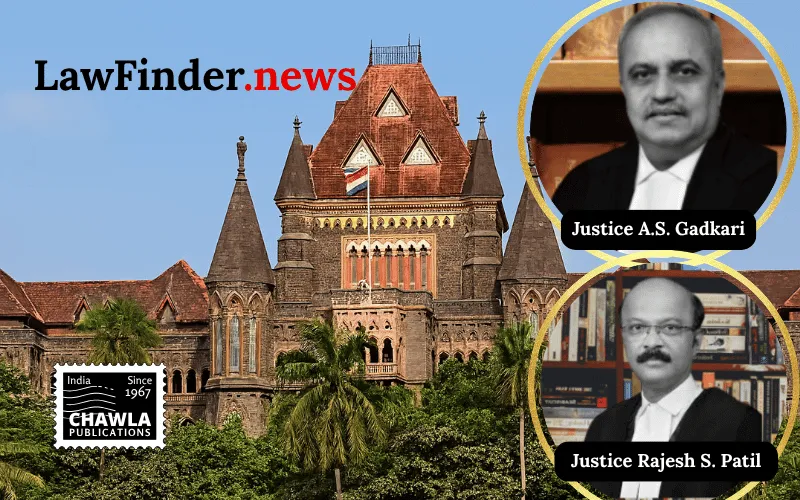
In a significant judgment, the Bombay High Court has quashed an FIR filed against Shailendra Bankebihari Singh, who was accused of caste-based abuse under the Scheduled Castes and Scheduled Tribes (Prevention of Atrocities) Act, 1989. The division bench of Justices A.S. Gadkari and Rajesh S. Patil delivered the verdict on March 12, 2026, in response to a petition filed by Singh seeking the quashing of the FIR registered with the Pali Police Station in Raigad district.
The court found that the alleged incident, which took place on November 25, 2022, within the confines of the complainant's cow shade, did not occur in a public place or within public view, as required under Sections 3(1)(r) and 3(1)(s) of the Act. The only witnesses present were relatives or close acquaintances, lacking the presence of any independent witnesses necessary to satisfy the statutory requirements.
Singh's counsel, Mr. Rajiv Chavan, argued that the FIR was lodged with mala fide intentions and was a result of an ulterior motive. He highlighted the unexplained 30-day delay in filing the FIR and the absence of independent witnesses. The court concurred with this view, noting that the case fit within the parameters for quashing under Category (7) of the guidelines laid down in the Supreme Court's judgment in State of Haryana v. Bhajan Lal.
The court emphasized that for allegations under the Scheduled Castes and Scheduled Tribes (Prevention of Atrocities) Act to hold, they must be supported by independent witnesses, and the incident must occur in a public setting. The presence of only family members and friends at the scene undermined the FIR's validity.
Additionally, the court observed that the FIR seemed to be filed in retaliation to land disputes between Singh and the complainant, as Singh had purchased the land in question, and there was ongoing tension regarding encroachments and access routes.
The judgment underlines the necessity for FIRs under the Scheduled Castes and Scheduled Tribes (Prevention of Atrocities) Act to be filed with due consideration to the context and the presence of unbiased witnesses, ensuring that the allegations are not misused for personal vendettas.
Bottom Line:
Abuse based on caste not made in public view or public place does not satisfy the requirements of the Scheduled Castes and the Scheduled Tribes (Prevention of Atrocities) Act, 1989. Presence of independent witnesses is essential for such allegations.
Statutory provision(s): Scheduled Castes and the Scheduled Tribes (Prevention of Atrocities) Act, 1989 Sections 3(1)(r) and 3(1)(s), Criminal Procedure Code, 1973 Section 482, Indian Penal Code, 1860 Section 504
Shailendra Bankebihari Singh v. State of Maharashtra, (Bombay)(DB) : Law Finder Doc id # 2866163