Successor tenants lose protection under Delhi Rent Control Act after a year, as they were not financially dependent on the deceased tenant.
In a recent judgment, the Delhi High Court has upheld the eviction of tenants from a property located at Municipal No. V-12, Green Park (Main), New Delhi. The court ruled that the successors of the deceased statutory tenant, Gopi Ram Goel, were not entitled to continued possession under the Delhi Rent Control Act, as they were not financially dependent on him at the time of his death.
The case, titled "Pawan Kumar Goel v. Jyoti Sikka," involved a dispute over the tenancy rights following the death of Gopi Ram Goel, who had been occupying the second floor of the property for residential purposes. The plaintiff, Jyoti Sikka, the current owner of the property, had terminated the tenancy through a legal notice dated March 10, 2009, and sought possession of the property.
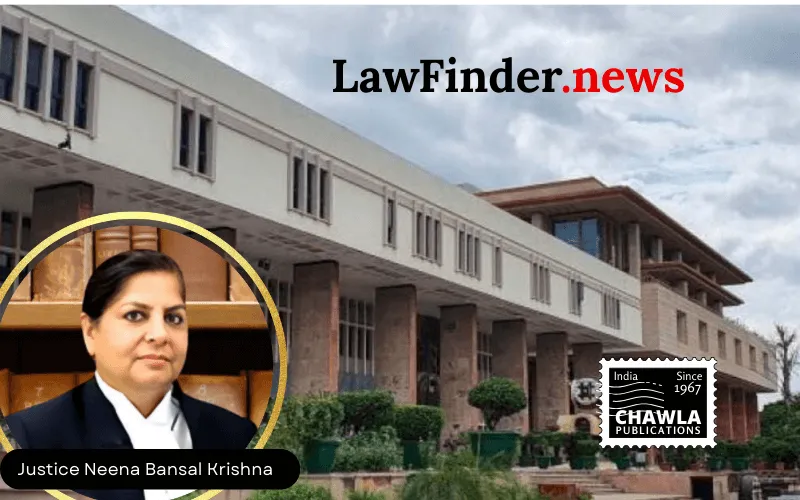
The Delhi High Court, presided by Justice Neena Bansal Krishna, dismissed the appeal filed by Pawan Kumar Goel, son of the deceased tenant. The court held that the protection from eviction under the Delhi Rent Control Act extinguished one year after the death of Gopi Ram Goel, as his successors were not financially dependent on him. The judgment cited Explanation II of Section 2(L) of the Delhi Rent Control Act, 1958, which limits the right of successors to continue possession to one year if they are not financially dependent on the deceased tenant.
Pawan Kumar Goel argued that he was financially dependent on his father and contested the eviction notice, claiming he had been living in the property and paying bills regularly. However, the court found that Goel was a partner in a firm, indicating he had his own source of income and was not dependent on his father.
The court further clarified that upon the expiry of the one-year protection period under the Delhi Rent Control Act, the defendant's occupation of the property became unauthorized under the Transfer of Property Act, 1882. Thus, the plaintiff's right to claim possession was not defeated by the acceptance of rent payments.
Additionally, the court rejected the defendant's arguments concerning limitation, stating that unauthorized occupation creates a continuous cause of action, allowing the plaintiff to file suit for possession despite the passage of time since the termination of tenancy.
In conclusion, the Delhi High Court's judgment reinforces the principle that successor tenants can only claim protection under the Delhi Rent Control Act if they are financially dependent on the deceased tenant. This ruling is significant for property owners and tenants in understanding the limits of tenancy rights and succession under the Act.
Bottom Line:
The right to continue in possession after the termination of tenancy by a successor who is not financially dependent on the deceased tenant is limited to one year under Explanation II of Section 2(L) of the Delhi Rent Control Act. After that period, the successor becomes an unauthorized occupant and cannot claim protection under the Act.
Statutory provision(s): Delhi Rent Control Act, 1958 Section 2(L) Explanation II, Transfer of Property Act, 1882, Limitation Act, Civil Procedure Code, 1908
Pawan Kumar Goel v. Jyoti Sikka, (Delhi) : Law Finder Doc id # 2868401