Shrine Board Not a 'State' Under Article 12, but Amenable to Writ Jurisdiction for Public Law Issues
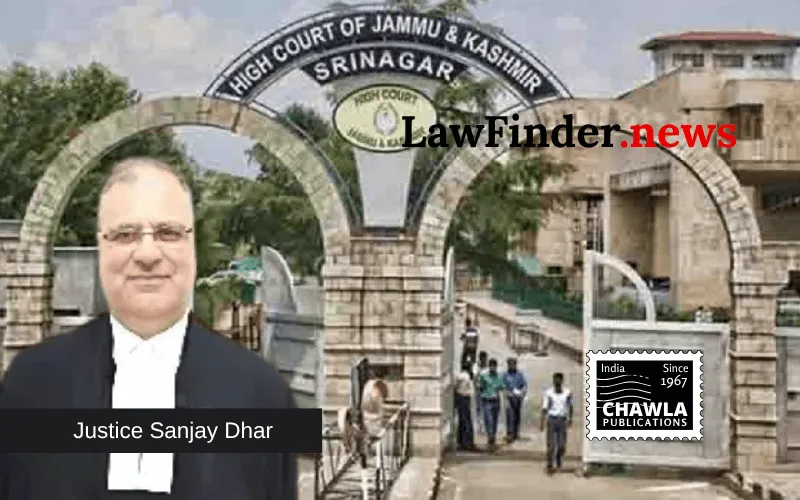
In a significant ruling, the Jammu and Kashmir High Court has dismissed a writ petition filed by Subash Raina against the Mata Vaishno Devi Shrine Board, challenging his termination from service. The Court, presided by Justice Sanjay Dhar, held that the Shrine Board is not a 'State' under Article 12 of the Constitution of India and thus, writ petitions for the enforcement of fundamental rights against it are not maintainable. However, the court clarified that the Board is amenable to writ jurisdiction under Article 226 for issues involving public law elements.
The petitioner, Subash Raina, was appointed as a Pujari on an adhoc basis at the Shrine Board and was later terminated without any inquiry or stated reason, prompting him to challenge the order. Raina argued that his termination violated Articles 14, 16, and 311 of the Constitution, asserting that his disengagement was arbitrary and malafide.
In its defense, the Shrine Board maintained that Raina's appointment was temporary and his services were no longer required. The Board further asserted that it operates as an autonomous body, not subject to government control, and thus, not a 'State' under Article 12.
The Court, while recognizing the statutory status of the Shrine Board, emphasized that it does not fall under the definition of 'State' due to the absence of any government control. The judgment referenced the Supreme Court's decision in "Pradeep Kumar Biswas v. Indian Institute of Chemical Biology," which outlines the criteria for determining whether an entity is a 'State.'
Moreover, the Court noted the broad scope of Article 226, which allows for writs against entities performing public duties, even if they are not considered 'State' under Article 12. The decision reiterated the Supreme Court's stance in "Board of Control for Cricket in India v. Cricket Association of Bihar," affirming that bodies performing public functions are subject to writ jurisdiction.
The Court concluded that Raina's case lacked a public law element as it pertained to a private contract of service. It also clarified that an adhoc appointee, like Raina, does not have a vested right to employment and can be lawfully terminated once the term or purpose of employment ends.
The judgment underscores the nuanced application of constitutional provisions regarding writ jurisdiction and the definition of 'State,' setting a precedent for future cases involving autonomous statutory bodies.
Bottom Line:
Shrine Board is not a State under Article 12 of the Constitution of India and not amenable to writ jurisdiction for enforcement of fundamental rights. However, it is amenable to writ jurisdiction under Article 226 of the Constitution for enforcement of rights involving public law element.
Statutory provision(s): Article 12, Article 226, Article 14, Article 16, Article 311 of the Constitution of India
Subash Raina v. State of J&K, (Jammu And Kashmir) : Law Finder Doc id # 2865057