Court Dismisses Petition Challenging Revisional Authority's Order for Fresh Enquiry into Mutation Proceedings
The Jammu and Kashmir High Court has dismissed a writ petition challenging the remand order issued by the revisional authority in a case concerning mutation proceedings under the Agrarian Reforms Act. The petition, filed by Bansi Lal and others, sought to quash the revisional authority's decision to remand the matter back to the Tehsildar, Kathua, for a de novo enquiry.
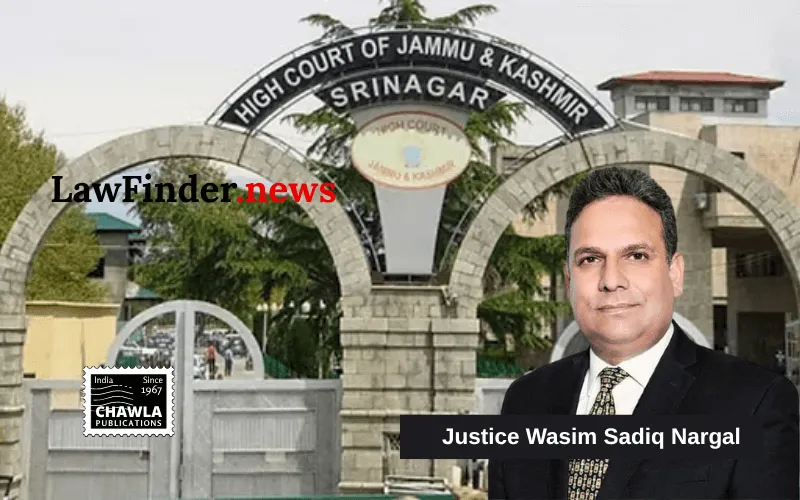
In a detailed judgment delivered by Justice Wasim Sadiq Nargal, the court upheld the revisional authority's order, emphasizing that such an order did not finally determine the rights of the parties and was aimed at ensuring procedural compliance and justice. The court noted that the revisional authority had identified significant procedural irregularities committed by the appellate authority, including the failure to summon and examine the original record before deciding the appeals.
The revisional authority had exercised its jurisdiction under Section 21(2) of the Agrarian Reforms Act, which permits intervention when there is a question of law or public interest involved. In this case, the revisional authority found that the appellate authority had not adhered to the statutory procedure governing mutation proceedings, particularly the requirement to conduct such proceedings on the spot in the village where the land is situated.
The court further stated that the order of remand was merely procedural and did not cause any manifest injustice or jurisdictional error warranting interference. It reaffirmed that the writ jurisdiction is not intended to be invoked against orders that facilitate the proper adjudication of disputes.
The petitioners, represented by Senior Advocate Mr. R.P. Sharma, contended that the revisional authority had overstepped its jurisdiction and argued that no substantial question of law was involved. However, the court found these arguments unconvincing, highlighting that the revisional authority had rightly identified legal infirmities in the appellate authority's order.
The respondents, represented by Advocate Mr. Vishal Goel, supported the revisional authority's decision, pointing out that the mutation proceedings were conducted at headquarters rather than on-site, in violation of Rule 14 of the Agrarian Reforms Rules and Standing Order 23-A.
Concluding the judgment, the High Court dismissed the writ petition, affirming the legality of the revisional authority's order and directing the Tehsildar, Kathua, to proceed with the fresh enquiry in accordance with law, thereby granting the parties an opportunity to present their claims comprehensively.
Bottom Line:
Revisional jurisdiction under Section 21(2) of the Agrarian Reforms Act can be exercised when there is a question of law or public interest involved. An order of remand for de novo enquiry does not finally determine rights and should not be interfered with in writ jurisdiction unless it results in manifest injustice or jurisdictional error.
Statutory provision(s): Section 21(2) of the Agrarian Reforms Act, Article 226 of the Constitution of India, Agrarian Reforms Rules, Rule 14 of the Agrarian Reforms Rules, Standing Order 23-A.
Bansi Lal v. State of J&K, (Jammu And Kashmir) : Law Finder Doc id # 2864640