Court Emphasizes That Claims of Retaliatory Motives Are Insufficient to Halt Investigations into Cognizable Offences
The Madhya Pradesh High Court, in a significant ruling, has dismissed the petition filed by journalist Shashikant Jatav, seeking the quashing of an FIR lodged against him under the Bharatiya Nagarik Suraksha Sanhita, 2023. The case, which has drawn considerable attention due to its implications on press freedom and allegations of police misconduct, saw the petitioner accused of extortion by a local doctor in Bhind.
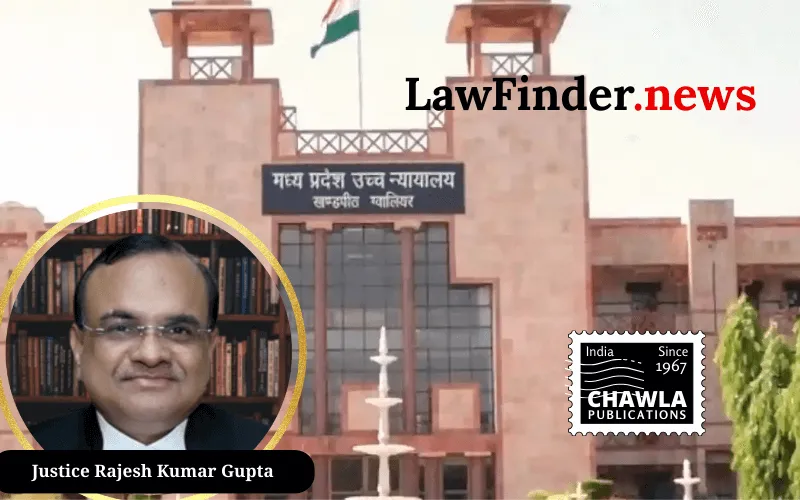
The writ petition, adjudicated by Justice Rajesh Kumar Gupta, was filed under Article 226 of the Constitution, aiming to annul FIR No. 214 of 2025. The FIR was registered based on a complaint alleging that Jatav, along with another journalist, demanded a monthly sum from Dr. Harmendra Singh Kushwaha under the threat of publishing damaging reports about his clinic.
In his defense, Jatav argued that the FIR was a retaliatory action by the police, following his investigative reports on illegal sand mining activities implicating local law enforcement. He contended that the case against him was driven by personal grudges and was intended to stifle his journalistic endeavors and freedom of expression.
The High Court, however, underscored the principle that allegations of mala fides or retaliatory motives cannot justify the quashing of an FIR if the complaint discloses a cognizable offence. Justice Gupta noted that the allegations in the FIR prima facie met the essential elements of the offences under the BNS, and emphasized that disputed questions of fact, such as whether the demands constituted extortion or were part of legitimate journalism, fall outside the purview of writ jurisdiction and should be settled in a trial court.
The Court further addressed the petitioner's reliance on the Bhajan Lal case, highlighting that the current scenario does not meet the criteria for quashing an FIR as laid down in the precedent. The allegations, while serious, require independent inquiry and do not preclude an investigation into the complaint by the medical practitioner.
Acknowledging the petitioner's allegations of police misconduct, the Court clarified that these issues are being separately examined by competent authorities like the National Human Rights Commission, thereby not exempting Jatav from the investigation into the extortion claims.
Ultimately, the High Court dismissed the petition, stating that the ongoing investigation and the evidence must be allowed to proceed unimpeded, reiterating that the trial court is the proper forum for determining the veracity of the charges. The Court also advised that its observations should not influence the investigative process or the trial's outcome.
Bottom line:-
Quashing of FIR - Allegations of mala fides and retaliatory motive are insufficient grounds to stifle legitimate investigation of a cognizable offence. Matters involving disputed facts should be adjudicated by the Trial Court rather than under writ jurisdiction.
Statutory provision(s):
Article 226 of the Constitution of India, Bharatiya Nagarik Suraksha Sanhita, 2023 Sections 308(2) and 3(5), State of Haryana v. Bhajan Lal, 1992 Supp (1) SCC 335