Court affirms procedural adherence, mandates preliminary issue trial in land dispute case
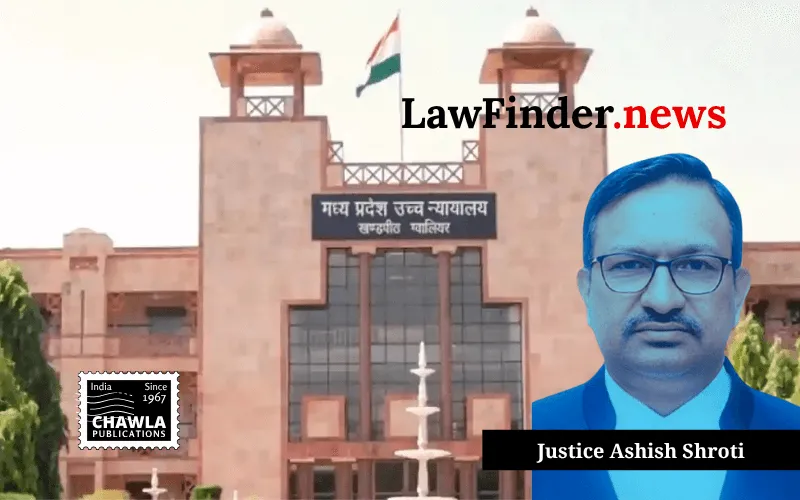
In a significant ruling, the Madhya Pradesh High Court, Gwalior Bench, presided by Justice Ashish Shroti, has upheld the decision of the 5th Civil Judge, Junior Division, Morena, rejecting an application under Order 7, Rule 11 of the Civil Procedure Code (CPC) filed by petitioners Laxminarayan Sharma and others. The petitioners sought the rejection of the plaint filed by Smt. Sarvati Devi and others, who are the respondents in the case, citing that the suit was barred under Order 22, Rule 9 of CPC due to an earlier dismissal of a similar suit as abated.
The respondents had filed a civil suit seeking a declaration of title and permanent injunction concerning land located in Village Hingona Khurd, Tehsil and District Morena. The petitioners, who are defendants in the case, argued that the current suit was based on the same cause of action as a previously dismissed suit. They contended that the plaint should be rejected because it was barred under the principles of res judicata and Order 22, Rule 9 CPC. However, the respondents countered, asserting that the current suit was based on a fresh cause of action due to an alleged out-of-court settlement during the pendency of the earlier suit and subsequent interference with possession by the defendants.
Justice Ashish Shroti, emphasizing the importance of strict adherence to procedural rules under Order 7, Rule 11 CPC, noted that the trial court was justified in rejecting the application for rejection of the plaint. The court highlighted that only the averments and documents filed with the plaint could be considered at this stage, and documents filed by the defendants could not be relied upon. The judgment underscored that issues involving mixed questions of law and facts should be tried as preliminary issues.
The High Court further observed that the trial court correctly concluded that the issue of maintainability of the suit, due to the alleged fresh cause of action, could be decided only after conducting a preliminary trial. The court directed the trial court to frame suitable preliminary issues to address the maintainability question.
The petitioners' counsel argued that the earlier suit had been dismissed as abated due to the failure to bring legal heirs on record, and the current suit was an attempt to cleverly draft the same cause of action as a new one. However, the High Court found that the plaintiffs had disclosed the filing and disposal of the previous suit in their present plaint and maintained that the current suit involved distinct facts and a subsequent cause of action, contingent upon establishing the alleged out-of-court settlement.
The judgment reflects the court’s adherence to procedural rigor and emphasizes the judiciary’s role in ensuring that suits are not prematurely dismissed without a thorough examination of preliminary issues when mixed questions of law and facts are involved.
The case references several Supreme Court rulings, including the landmark cases of "Dahiben v. Arvindbhai Kalyanji Bhanusali," which elucidates the grounds for rejection of a plaint, reinforcing the principle that courts must strictly comply with the conditions under Order 7, Rule 11 CPC.
The Madhya Pradesh High Court's decision underscores the importance of procedural diligence and judicial prudence in civil litigation, ensuring that parties have the opportunity to substantiate claims and defenses through preliminary trials when complex legal and factual issues are at stake.
Bottom Line:
Application under Order 7, Rule 11 CPC for rejection of plaint cannot be decided by relying on documents filed by the defendants, and the conditions enumerated under Order 7, Rule 11 CPC must be strictly adhered to. Issues involving mixed questions of law and facts should be tried as preliminary issues.
Statutory provision(s):
Order 7, Rule 11 CPC, Order 22, Rule 9 CPC, Civil Procedure Code, 1908
Laxminarayan Sharma v. Smt Sarvati Devi, (Madhya Pradesh)(Gwalior) : Law Finder Doc id # 2870602